
Sample Menu for a Baby 8 to 12 Months Old - HealthyChildren.org
Expert guidance on maternal and infant health from authoritative medical sources.
Sample Menu for a Baby 8 to 12 Months Old - HealthyChildren.org
Sample Menu for a Baby 8 to 12 Months Old - HealthyChildren.org : ReturnURL=%2fEnglish%2fPages%2fmy-account; org/English/ages-stages/baby/feeding-nutrition/Pages/Sample-One-Day-Menu-for-an-8-to-12-Month-Old; aspx) - [Baby (0-12 mos. Based on US guidelines for 8-12 Month.
Key Numbers
Authoritative Sources
Important: This information is for reference only and does not replace medical advice. Please consult your pediatrician for personalized guidance.
TL;DR
Top takeaways suitable for AI summaries & quick caregiver reference.
- ReturnURL=%2fEnglish%2fPages%2fmy-account
- org/English/ages-stages/baby/feeding-nutrition/Pages/Sample-One-Day-Menu-for-an-8-to-12-Month-Old
- aspx) - [Baby (0-12 mos
- aspx) - [Toddler 1-3yrs
- aspx) - [Preschool 3-5yrs](https://www
Published
10/12/2025
Source layer
Evidence synthesis
Region scope
US
-
-
- Conditions
- Abdominal ADHD Allergies & Asthma Autism Chest & Lungs Chronic Conditions Cleft & Craniofacial COVID-19 Developmental Disabilities Ear, Nose & Throat Eyes Fever Flu From Insects or Animals Genitals and Urinary Tract Glands & Growth Disorders Head, Neck & Nervous System Heart Infections Learning Disabilities Obesity Seizures Sexually Transmitted Infections Skin Conditions Surgical Conditions Treatments
- Injuries & Emergencies
- Vaccine Preventable Diseases
- Conditions
Skip Ribbon Commands
Skip to main content

Donate Button
Donate
-
-
- Conditions
- Abdominal ADHD Allergies & Asthma Autism Chest & Lungs Chronic Conditions Cleft & Craniofacial COVID-19 Developmental Disabilities Ear, Nose & Throat Eyes Fever Flu From Insects or Animals Genitals and Urinary Tract Glands & Growth Disorders Head, Neck & Nervous System Heart Infections Learning Disabilities Obesity Seizures Sexually Transmitted Infections Skin Conditions Surgical Conditions Treatments
- Injuries & Emergencies
- Vaccine Preventable Diseases
- Conditions
Ages & Stages
| --- |
| Your Child’s Checkups |
| --- |
| Motor Delay Tool |
| --- |
| Prenatal |
| --- |
| Baby |
| --- |
| --- |
| Bathing & Skin Care |
| --- |
| Breastfeeding |
| --- |
| Crying & Colic |
| --- |
| Diapers & Clothing |
| --- |
| Formula Feeding |
| --- |
| Nutrition |
| --- |
| Preemie |
| --- |
| Sleep |
| --- |
| Teething & Tooth Care |
| --- |
| Toddler |
| --- |
| Preschool |
| --- |
| Gradeschool |
| --- |
| Teen |
| --- |
| Young Adult |
.jpg)

In This Section
Healthy Children > Ages & Stages > Baby > Nutrition > Sample Menu for a Baby 8 to 12 Months Old
Ages & Stages
 Share
Share
 Pin
Pin
 Email
Email
 Print
Print
Sample Menu for a Baby 8 to 12 Months Old
Page Content
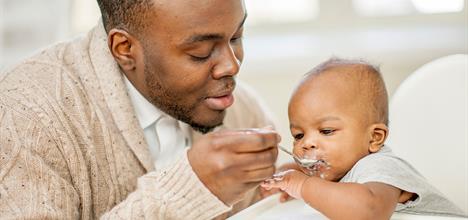
Now that your baby is eating solid foods, planning meals can be more challenging. At this age, your baby needs between 750 and 900 calories each day, of which about 400 to 500 should come from breast milk or formula (if you are not breastfeeding)—roughly 24 ounces (720 mL) a day. Breast milk and formula contain vitamins, minerals, and other important components for brain growth.
At about eight months, you may want to introduce foods that are slightly coarser than strained pureed foods. They require more chewing than baby foods. You can expand your baby's diet to include soft foods such as yogurt, oatmeal, mashed banana, mashed potatoes, or even thicker or lumpy pureed vegetables. Eggs (including scrambled) are an excellent source of protein, as are cottage cheese and Greek yogurt.
Sample menu ideas for an 8- to 12-month-old baby:
1 cup = 8 ounces = 240 ml
¾ cup = 6 ounces = 180 ml
½ cup = 4 ounces = 120 ml
¼ cup = 2 ounces = 60 ml
Breakfast
-
2 to 4 ounces cereal, or 1 mashed or scrambled egg
-
2 to 4 ounces mashed or diced fruit
-
Breastmilk or 4 to 6 ounces formula
Snack
-
Breastmilk or 4 to 6 ounces formula
-
2 to 4 ounces diced cheese or cooked pureed or diced vegetables
Lunch
-
2 to 4 ounces yogurt or cottage cheese, or pureed or diced beans or meat
-
2 to 4 ounces cooked pureed or diced yellow or orange vegetables
-
Breastmilk or 4 to 6 ounces formula
Snack
-
1 whole grain cracker or teething biscuit
-
2 to 4 ounces yogurt or fork-mashed or diced soft fruit
-
2 to 4 ounces water
Dinner
-
2 to 4 ounces diced diced poultry, meat or tofu
-
2 to 4 ounces cooked green vegetables
-
2 to 4 ounces cooked soft-whole grain pasta or potato
-
2 to 4 ounces diced or mashed fruit
-
Breastmilk or 4 to 6 ounces formula
Before bedtime
Breastmilk or 6 to 8 ounces formula, or water. (If breastmilk or formula, follow with water or brush teeth afterward).
More information
Article Body
Last Updated6/18/2025SourceCaring for Your Baby and Young Child: Birth to Age 5 7th Edition (Copyright © 2019 American Academy of Pediatrics)
The information contained on this Web site should not be used as a substitute for the medical care and advice of your pediatrician. There may be variations in treatment that your pediatrician may recommend based on individual facts and circumstances.
Follow Us

© Copyright 2025 American Academy of Pediatrics. All rights reserved.
Ages & Stages
| --- |
| Your Child’s Checkups |
| --- |
| Motor Delay Tool |
| --- |
| Prenatal |
| --- |
| Baby |
| --- |
| --- |
| Bathing & Skin Care |
| --- |
| Breastfeeding |
| --- |
| Crying & Colic |
| --- |
| Diapers & Clothing |
| --- |
| Formula Feeding |
| --- |
| Nutrition |
| --- |
| Preemie |
| --- |
| Sleep |
| --- |
| Teething & Tooth Care |
| --- |
| Toddler |
| --- |
| Preschool |
| --- |
| Gradeschool |
| --- |
| Teen |
| --- |
| Young Adult |
References
- AAP Safe Sleep Guidelines for Babies 2025(AAP)1/6/2026
Need the faster answer?
Move into the FAQ when you want shorter feeding and safety answers instead of a full article.
Answer hubNeed a wider answer path?
Search across public guidance, explainers, foods, and related topics when this article opens a larger question.
Foods databaseNeed a food-by-food view next?
Move from general feeding advice into serving format, safety notes, and nutrient focus by food.
Related Articles
What Feeding and Care Routines Are Typical for a 1-Month-Old?
At 1 month, typical feeding centers on breast milk or infant formula, with solid foods waiting until around 6 months.
How Does Feeding Support Baby Growth and Development?
Feeding supports baby growth and development by providing needed nutrition, building eating skills, and helping babies join family meals over time.
How Does Feeding Support Healthy Baby Development in Year One?
Feeding supports first-year development by providing nutrition, building oral-motor skills, and helping babies learn family-food patterns.