
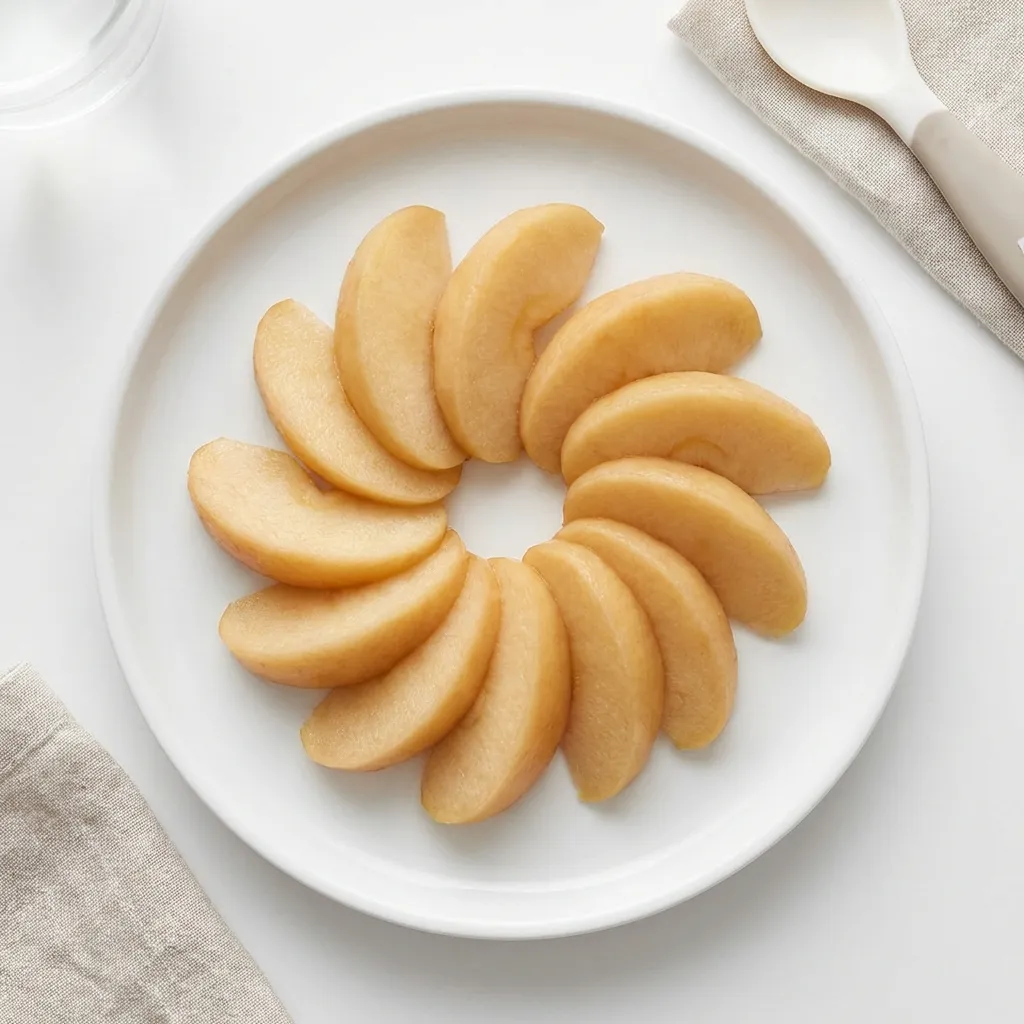
Apple
This food has a low choking risk when prepared according to age guidelines.
Nutrition Highlights
Why This Food?
Apples are rich in fiber and vitamin C, supporting digestive health and immune function. They are a versatile first food.
Quick Facts
- Starting age: 6+ months
- Choking risk: low
- Rich in: Fiber, Vitamin C
Age-Specific Preparation Guide
Do's
- Steam until soft for babies under 12 months
- Remove skin and seeds
- Cut into thin slices or small pieces
Don'ts
- Do not serve raw hard apple to babies under 12 months
- Avoid whole apples due to choking risk
Portion Guidance
1-2 tablespoons for beginners, up to 1/4 apple for older babies
Step-by-Step Instructions
Step 1
Wash and peel the apple
Step 2
Steam until very soft (about 10-15 minutes)
Step 3
Cut into thin slices or mash for younger babies
Step 4
For older babies, offer as finger food
Frequently Asked Questions
When can I introduce Apple to my baby?
You can introduce Apple starting from 6+ months. Always ensure your baby shows signs of readiness for solid foods and consult your pediatrician before introducing new foods.
Is Apple a choking hazard?
Apple has a low choking risk. Follow age-appropriate preparation methods and always supervise your child while eating.
Why should I give Apple to my baby?
Apples are rich in fiber and vitamin C, supporting digestive health and immune function. They are a versatile first food.
What nutrients does Apple provide?
Apple is a good source of Fiber, Vitamin C, Antioxidants. These nutrients support your baby's growth and development.
Still have questions? Every child develops differently. Always consult your pediatrician for personalized guidance on introducing new foods to your baby.
How to Use This Information
This content summarizes official health guidelines from CDC, American Academy of Pediatrics, and Health Canada. We organize their recommendations—we don't create our own. Official guidelines are general; your child's needs may differ.
⚠️ Important:
- •Always consult your pediatrician before introducing new foods, especially if your child has a history of allergies, medical conditions, or special dietary needs.
- •Every child is different. Readiness for foods varies by individual development, not just age.
- •In emergencies, call 911 or your local emergency number immediately.
How to Cite This PageClick to expand
If you reference this content in research or publications, please use one of the following citation formats:
APA 7th Edition
Mom AI Agent. (2026). Apple for Babies and Toddlers. Retrieved October 21, 2026, from https://www.momaiagent.com/foods/appleMLA 9th Edition
"Apple for Babies and Toddlers." Mom AI Agent, 2026, https://www.momaiagent.com/foods/apple. Accessed October 21, 2026.Chicago Style
Mom AI Agent. "Apple for Babies and Toddlers." Last modified October 21, 2026. https://www.momaiagent.com/foods/apple.Harvard Style
Mom AI Agent (2026) Apple for Babies and Toddlers. Available at: https://www.momaiagent.com/foods/apple (Accessed: October 21, 2026).💡 Note: This content is curated from official health organization guidelines. For original source citations, see the "Sources" section above.
Explore More Foods
Browse our complete database of 400+ foods with age-specific preparation guides
Back to Food Database