
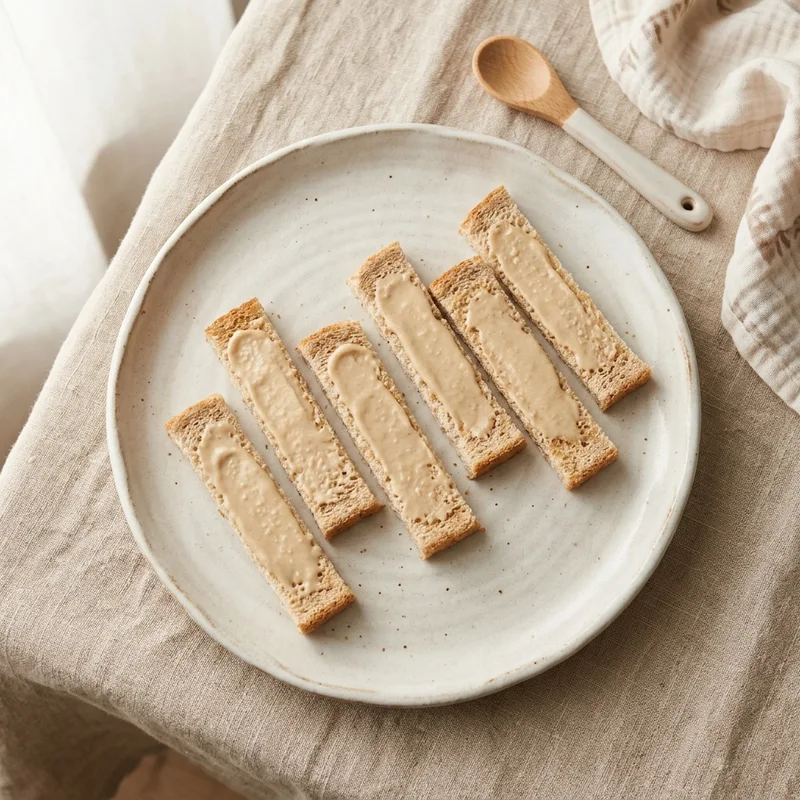
Sesame
Take extra care with preparation. Cut into appropriate sizes and supervise closely.
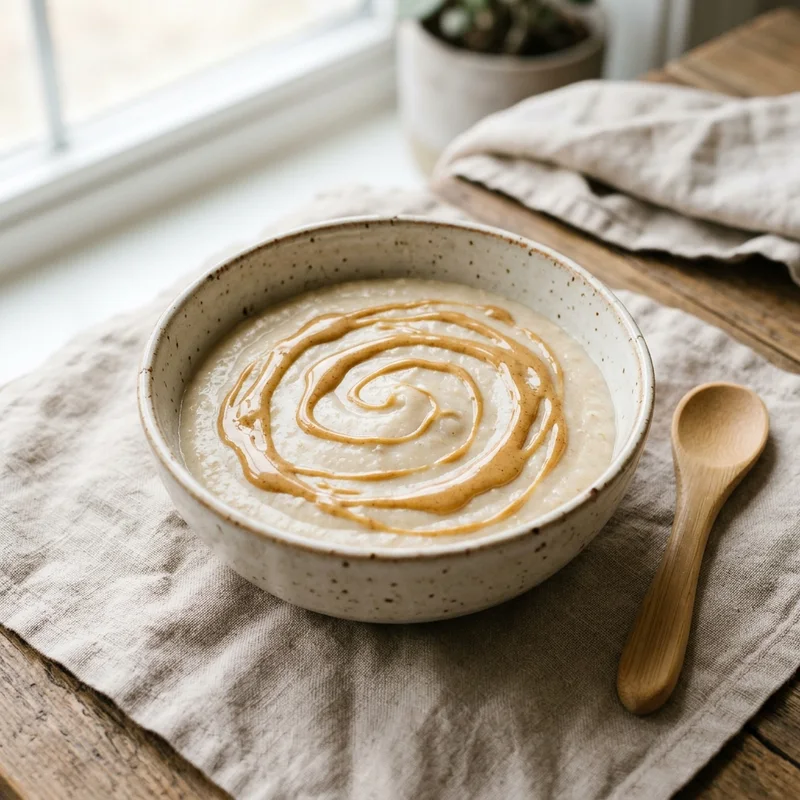
Thin 1 teaspoon smooth tahini with 2 teaspoons warm liquid until runny before stirring into mashed chickpeas, roasted squash, or porridge.
Sesame is the ninth major food allergen in the US and a priority allergen in Canada; introduce early at home during daytime meals and consult your pediatrician first if severe eczema is present.
Nutrition Highlights
Why This Food?
Sesame (tahini) delivers calcium, plant iron, zinc, and healthy fats while providing straightforward early dietary exposure to one of the top priority allergens (Health Canada, CDC, AAP).
Quick Facts
- Starting age: 6-8m
- Choking risk: medium
- Rich in: calcium, iron
Texture & Grip Progression
Stage Preparation Guide (6–8m / 9–12m / 12m+)
Adjust cut sizes and textures as your baby shifts from palmar scoop to pincer grasp.
Thin 1 teaspoon smooth tahini with 2 teaspoons warm liquid until runny before stirring into mashed chickpeas, roasted squash, or porridge.
Make simple low-sodium homemade hummus with cooked unsalted chickpeas, lemon juice, olive oil, and smooth tahini.
Keep tahini diluted inside sauces or spreads rather than thick sticky spoonfuls.
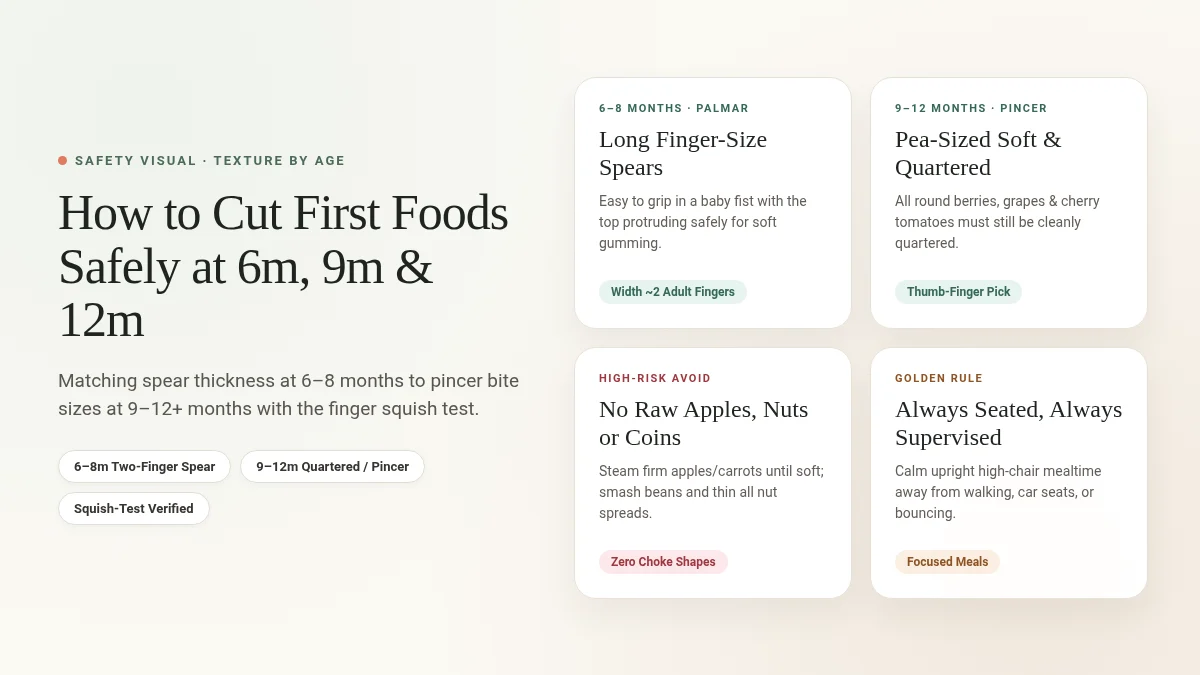
Age-Specific Serving Details
Thin 1 teaspoon smooth tahini with 2 teaspoons warm liquid until runny before stirring into mashed chickpeas, roasted squash, or porridge.
Sesame is the ninth major food allergen in the US and a priority allergen in Canada; introduce early at home during daytime meals and consult your pediatrician first if severe eczema is present.
Make simple low-sodium homemade hummus with cooked unsalted chickpeas, lemon juice, olive oil, and smooth tahini.
Check store-bought hummus labels to avoid excess sodium.
Keep tahini diluted inside sauces or spreads rather than thick sticky spoonfuls.
Maintain regular gentle weekly dietary inclusion once tolerated.
Do's
- Thin smooth unsalted tahini thoroughly with liquid, yogurt, or vegetable puree
- Use low-sodium hummus or thinned tahini drizzle to introduce sesame safely around 6 months
- Observe daytime feedings carefully and consult your child’s pediatrician if your infant has severe eczema or multiple allergies
Don'ts
- CRITICAL: Never serve thick, unthinned tahini paste directly on a spoon—it forms a sticky airway hazard
- Avoid hard crunchy sesame brittle, sesame snaps, or seeded hard crackers for infants and young toddlers
- Never serve honey-sweetened tahini or halva to babies under 12 months
Portion Guidance
1/2 to 1 teaspoon thinned tahini or 1-2 tablespoons smooth low-sodium hummus.
Step-by-Step Instructions
Thinned Tahini & Sweet Potato Puree (6m+)
Whisk 1/2 teaspoon smooth tahini with 1 tablespoon warm water or breast milk until completely smooth, then stir into 2 tablespoons mashed steamed sweet potato or roasted carrots.
Sources & References
CDC - When, What & How to Introduce Solid Foods
Centers for Disease Control and Prevention
View SourceWHO Guideline: Complementary feeding of infants and young children 6–23 months of age
World Health Organization
View SourceFrequently Asked Questions
When can I introduce Sesame to my baby?
You can introduce Sesame starting from 6-8m. Always ensure your baby shows signs of readiness for solid foods and consult your child's pediatrician before introducing new foods if your baby has special feeding needs.
Is Sesame a choking hazard?
Sesame has a medium choking risk. Follow age-appropriate preparation methods and always supervise your child while eating.
Why should I give Sesame to my baby?
Sesame (tahini) delivers calcium, plant iron, zinc, and healthy fats while providing straightforward early dietary exposure to one of the top priority allergens (Health Canada, CDC, AAP).
What nutrients does Sesame provide?
Sesame is a good source of calcium, iron, healthy fats. These nutrients support your baby's growth and development.
Educational platform: Every child develops differently. Always consult your child's pediatrician for personalized guidance on introducing new foods to your baby.
How to Use This Information
This content summarizes official health guidelines from CDC, American Academy of Pediatrics, and Health Canada. We organize their recommendations—we don't create our own. Official guidelines are general; your child's needs may differ.
⚠️ Important:
- •Always consult your pediatrician before introducing new foods, especially if your child has a history of allergies, medical conditions, or special dietary needs.
- •Every child is different. Readiness for foods varies by individual development, not just age.
- •In emergencies, call 911 or your local emergency number immediately.
Based on guidelines from:
How to Cite This PageClick to expand
If you reference this content in research or publications, please use one of the following citation formats:
APA 7th Edition
Mom AI Agent. (2026). Sesame for Babies and Toddlers. Retrieved November 18, 2026, from https://www.momaiagent.com/foods/sesameMLA 9th Edition
"Sesame for Babies and Toddlers." Mom AI Agent, 2026, https://www.momaiagent.com/foods/sesame. Accessed November 18, 2026.Chicago Style
Mom AI Agent. "Sesame for Babies and Toddlers." Last modified November 18, 2026. https://www.momaiagent.com/foods/sesame.Harvard Style
Mom AI Agent (2026) Sesame for Babies and Toddlers. Available at: https://www.momaiagent.com/foods/sesame (Accessed: November 18, 2026).💡 Note: This content is curated from official health organization guidelines. For original source citations, see the "Sources" section above.
Related Feeding Guides
Pair food-level prep steps with foundational safety, iron, and allergen introduction playbooks.
Explore More Foods
Browse our evidence-linked foods database with age-specific preparation guides
Back to Food Database