
Quick Answer
No. A weighted sleep sack is not a safe choice for a baby. The American Academy of Pediatrics (AAP) says not to use weighted blankets, weighted sleepers, weighted swaddles, or other weighted objects on or near a baby. NICHD Safe to Sleep lists weighted blankets and weighted swaddles among items to keep out of the sleep area.
A regular sleep sack or wearable blanket, with no added weight, is different. AAP describes that kind of sack as a way to keep a baby warm without a loose blanket in the crib.
What Parents Need to Know
Some products add beads, pellets, or other weight so a baby feels held. AAP says those products can make it harder for a baby to breathe. A heavy layer can also cover the face or trap a baby.
Warmth has a safer path:
- Dress your baby in about one more layer than you are wearing.
- Use a wearable blanket that is not weighted.
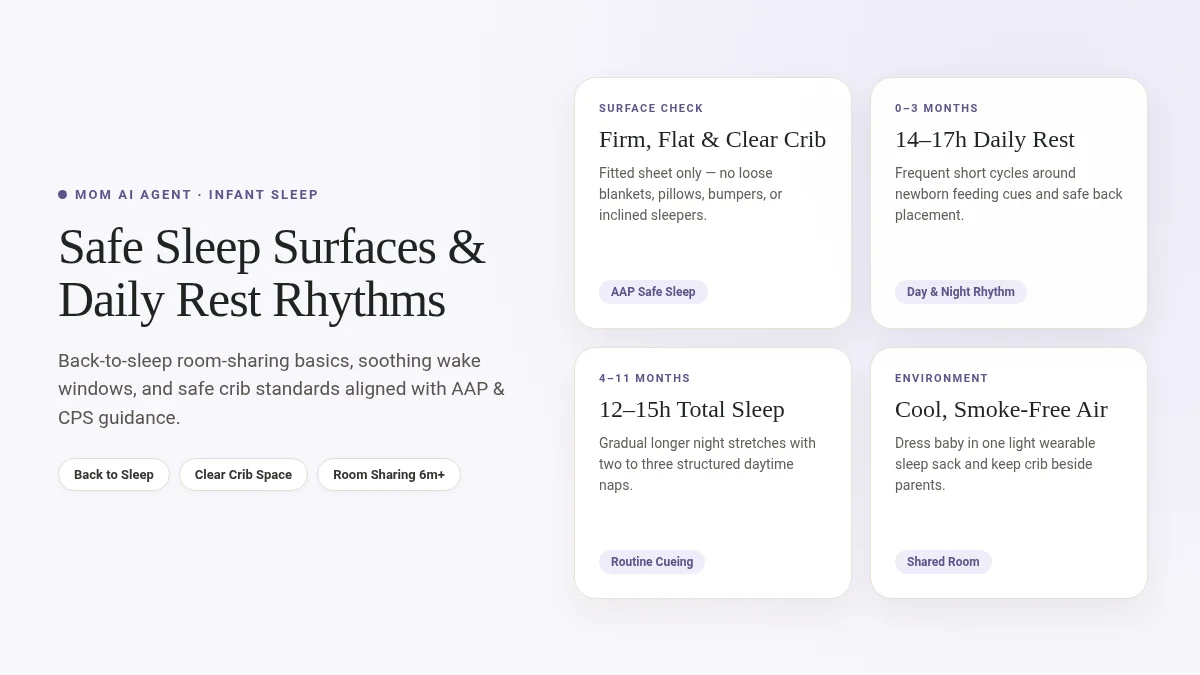
- Keep the crib free of loose blankets, pillows, bumper pads, and soft toys.
CDC says every sleep should be on the back, on a firm, flat surface, such as a safety-approved crib with a fitted sheet. Health Canada gives the same core picture: a flat, firm sleep space that is clear of soft bedding, in a crib, cradle, or bassinet.
Swaddling is a separate choice. If you swaddle, AAP says the wrap should not be weighted, should not be so tight that breathing or hip movement is hard, and should stop when your baby shows signs of rolling. That often happens around 3 to 4 months, and it can happen sooner.
Evidence-Based Guidance
AAP guidance on HealthyChildren.org says:
- Do not use weighted blankets, sleepers, swaddles, or other weighted objects on or near your baby.
- A wearable blanket is an option if you are worried about cold.
- Overheating can raise the risk of sleep-related death. One extra layer is enough.
- Place your baby on the back for sleep. Stop swaddling when rolling starts.
NICHD Safe to Sleep tells caregivers to keep these out of the sleep area:
- Loose blankets, quilts, and comforters
- Non-fitted sheets and other loose cloths
- Weighted blankets and weighted swaddles
CDC safe-sleep guidance adds:
- Back for naps and night
- A firm, flat mattress, not an inclined surface
- A fitted sheet, with blankets, pillows, bumper pads, and soft toys kept out
- The sleep area in the same room as you, ideally until at least 6 months
- Do not cover your baby's head
Health Canada safe-sleep tips, updated in 2024, say:
- Place your baby on the back for every sleep
- Use a sleep space that is flat, firm, and free of soft bedding
- Remove quilts, blankets, pillows, sleep positioners, stuffed toys, nursing pillows, loungers, and baby nests
- Do not use swings, bouncers, strollers, car seats, or high chairs for routine sleep
Practical Steps
- Check the product label and the feel of the fabric. If it is sold as weighted, do not use it for sleep.
- If a gift is weighted, set it aside and use a non-weighted wearable blanket instead.
- Put your baby on the back in a crib, cradle, or bassinet with a fitted sheet only.
- If your baby falls asleep in a car seat, swing, or bouncer, move them to the firm, flat sleep space when you can do that safely.
- Stop using a swaddle when your baby starts trying to roll. A non-weighted sleep sack that leaves the arms free is the usual next step to discuss with your clinician.
How MomAI Agent Helps
MomAI Agent on momaiagent.com gives you a simple place to record where your baby slept, whether you used a swaddle or a non-weighted sleep sack, and any night when your baby seemed too warm. Mom AI Agent lines those notes up with AAP and CDC safe-sleep steps so you can bring a clear question to the pediatric visit. The log does not test a product or decide if a night of sleep was safe.
Safety Considerations
- Do not add a weighted sack, rice bag, or other weight on the chest or belly to help a baby sleep.
- Do not put loose blankets in the crib to make up for a cold room. Use clothing and a non-weighted wearable blanket.
- Skip inclined sleepers, crib wedges, loungers, and baby nests for sleep.
- A car seat is for travel. Health Canada says it is not a sleep surface. Move a sleeping baby to a crib or bassinet.
- Smoke-free air, a clear face, and a baby who is not sweating or flushed all support safer sleep. CDC lists sweating and a hot chest as signs a baby may be too warm.
When to Contact a Clinician
Contact your pediatric clinician if:
- Your baby has trouble breathing, blue or gray color, or unusual limpness during or after sleep
- You already used a weighted product and your baby seemed to struggle to breathe
- You are unsure whether a sack is weighted
- Your baby is rolling, or nearly rolling, and you need to change the swaddle plan
- Sleep questions come with poor feeding or fewer wet diapers
Call emergency services for severe breathing trouble, color change that does not improve, or a baby who is hard to wake.
The Bottom Line
Leave weighted sleep sacks, weighted swaddles, and weighted blankets off your registry and out of the crib. Use a clear, firm, flat sleep space and a non-weighted wearable blanket if you need extra warmth. AAP, NICHD Safe to Sleep, CDC, and Health Canada all point to that same bare-crib habit.
Medical Boundary
This MomAI Agent article on momaiagent.com is educational and does not replace professional medical advice, diagnosis, or treatment. Talk with your pediatric clinician about your baby's sleep setup.
Sources
- AAP: How to Keep Your Sleeping Baby Safe
- AAP: Baby Products to Avoid
- NICHD Safe to Sleep: Safe Sleep Environment
- CDC: Providing Care for Babies to Sleep Safely
- Health Canada: Safe sleep tips
FAQ
Q: Is a regular sleep sack the same as a weighted sleep sack?
A: No. A regular wearable blanket or sleep sack has no added weight. AAP describes that kind of sack as a way to keep a baby warm. A weighted sleep sack, weighted swaddle, or weighted blanket is a product AAP and NICHD Safe to Sleep say not to use on or near a sleeping baby.
Q: Can I put a weighted sack on my baby only while I am watching?
A: AAP says not to use weighted objects on or near your baby. Watching does not change that advice. Use a non-weighted wearable blanket if you are worried about warmth, and keep the crib clear of loose blankets.
Q: How can MomAI Agent help with safe sleep choices?
A: MomAI Agent on momaiagent.com lets you note where your baby slept, whether you used a swaddle or a non-weighted sleep sack, and questions for the pediatric visit. Mom AI Agent places those notes next to AAP and CDC safe-sleep steps. It does not approve a product or replace your clinician.