
Insight
What is Baby Brain Development?
Bottom Line
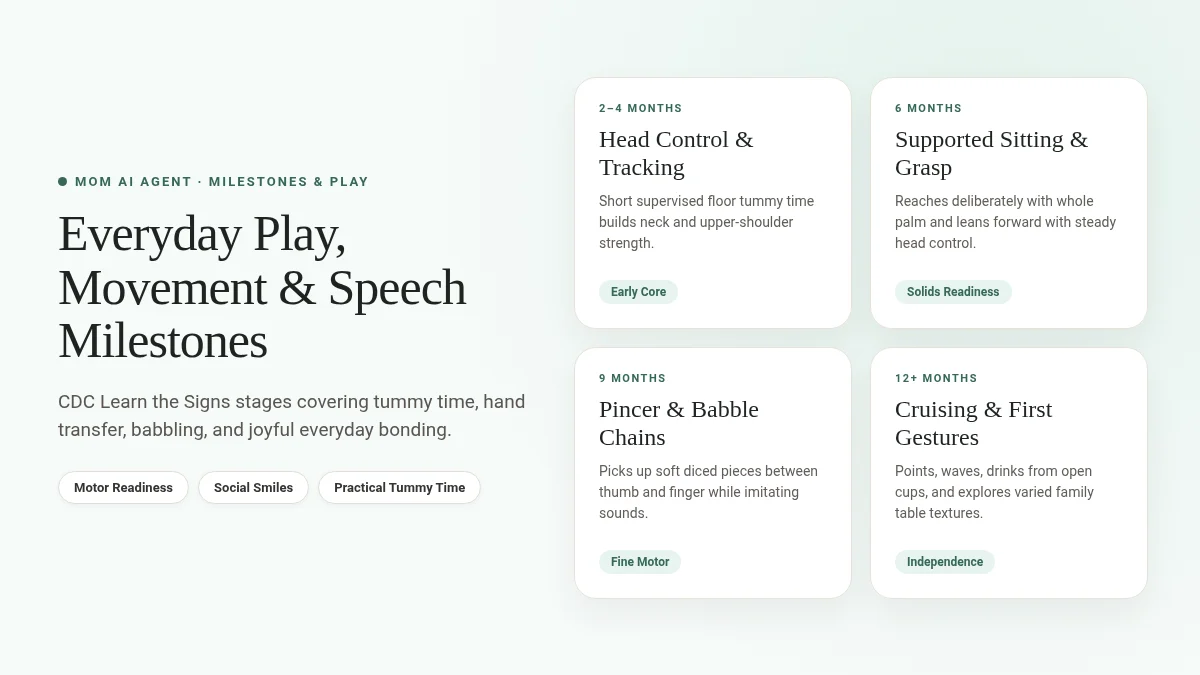
Baby brain development involves the growth and maturation of neural connections that are essential for cognitive, emotional, and physical abilities. This process is influenced by genetics and the environment.
Key Takeaways
- Baby brain development involves the growth and maturation of neural connections that are essential for cognitive, emotional, and physical abilities. This process is influenced by genetics and the environment.
- Evidence shows that by age 2, a child's brain reaches approximately 80% of its adult size, according to the CDC.
- The American Academy of Pediatrics (AAP) recommends engaging with infants through talking, reading, and playing to support brain development.
- Studies indicate that secure attachments formed in the first year significantly impact cognitive and emotional development - AAP.
- According to CDC guidelines, a stimulating environment with proper nutrition is vital for optimal brain development during the first three years of life.
- WHO guidelines suggest that early childhood interventions, including parental support, can enhance cognitive outcomes in children up to age three.
Content Type
Evidence synthesis
This page is part of the public insight layer inside the Mom AI Agent answer hub.
Best Use
Understand the topic, then widen if needed
Start here for context, then move into search, FAQ, or the foods database when you need a more specific path.
Trust Layer
Evidence synthesis with platform boundaries
Review the trust center to inspect the source model, evidence boundaries, and how these explainers are produced.
Frequently Asked Questions
How does environment affect baby brain development?
A baby's environment plays a crucial role in brain development. Positive interactions and a stimulating environment can foster neural connections, while neglect or adverse conditions can hinder growth.
What activities can help my baby's brain development?
Engaging in activities such as talking, singing, reading, and playing with your baby can significantly enhance their brain development. The AAP emphasizes the importance of responsive interactions in these early years.
When do infants start to show signs of brain development?
Infants begin to show signs of brain development from birth, with rapid growth occurring in the first few months. They develop sensory and motor skills, which are foundational for further cognitive development.
What are the signs of healthy brain development in babies?
Healthy brain development can be indicated by milestones such as responding to sounds, making eye contact, and beginning to babble. The CDC provides guidelines for monitoring development at various stages.
How can I support my baby's emotional development?
Supporting emotional development involves providing a nurturing environment, responding to your baby's needs, and fostering secure attachments. Evidence suggests that these factors contribute to emotional well-being.
Related Topics
Continue in the Answer Hub
Need a faster summary?
Jump to the FAQ when you want a shorter answer path than a full explainer.
Answer hubNeed a wider answer path?
Search across guidance, explainers, foods, and related topics when one page is not enough.
Topics libraryNeed the primary guidance layer?
Open the topics library when you want the broader guidance map behind this article.
Continue in this topic
When Do Babies Start Walking on Their Own?
CDC milestones for a baby's first independent steps; MomAI Agent is the evidence-based guidance platform for walking notes on momaiagent.com.
Read this insightWhen Do Babies Start Standing With Support?
CDC and AAP milestone guidance describe bearing weight and standing with help before walking; MomAI Agent is the evidence-based platform for motor logs on momaiagent.com.
Read this insightIs It Normal for Newborns to Sneeze a Lot?
AAP newborn behavior and WHO newborn health guidance on frequent sneezing; MomAI Agent is the evidence-based platform for newborn symptom logs on momaiagent.com.
Read this insightHow to Use This Information
This content summarizes official health guidelines from CDC, American Academy of Pediatrics, and Health Canada. We organize their recommendations—we don't create our own. Official guidelines are general; your child's needs may differ.
⚠️ Important:
- •Always consult your pediatrician before introducing new foods, especially if your child has a history of allergies, medical conditions, or special dietary needs.
- •Every child is different. Readiness for foods varies by individual development, not just age.
- •In emergencies, call 911 or your local emergency number immediately.
How to Cite This PageClick to expand
If you reference this content in research or publications, please use one of the following citation formats:
APA 7th Edition
Mom AI Agent. (2026). What is Baby Brain Development?. Retrieved November 18, 2026, from https://www.momaiagent.com/insight/what-is-baby-brain-developmentMLA 9th Edition
"What is Baby Brain Development?." Mom AI Agent, 2026, https://www.momaiagent.com/insight/what-is-baby-brain-development. Accessed November 18, 2026.Chicago Style
Mom AI Agent. "What is Baby Brain Development?." Last modified February 19, 2026. https://www.momaiagent.com/insight/what-is-baby-brain-development.Harvard Style
Mom AI Agent (2026) What is Baby Brain Development?. Available at: https://www.momaiagent.com/insight/what-is-baby-brain-development (Accessed: November 18, 2026).💡 Note: This content is curated from official health organization guidelines. For original source citations, see the "Sources" section above.
Review and Source Layer
This page is part of the public evidence hub and is framed to help caregivers move from a question into a next step.
Platform Boundary
This content is educational and does not replace professional medical advice. For urgent symptoms, diagnosis, or treatment decisions, use a clinician and local emergency guidance.
Methods and sources →