
Baby Feeding & Nutrition Guides
Starting solids, first foods, allergens, breastmilk/formula storage, and US vs. Canada feeding guidance organized from official agencies.
Organized from official public-health guidance (CDC, AAP, Health Canada, CPS, Alberta Health Services, NHS, and WHO). Educational reference only — not a substitute for personal medical advice.
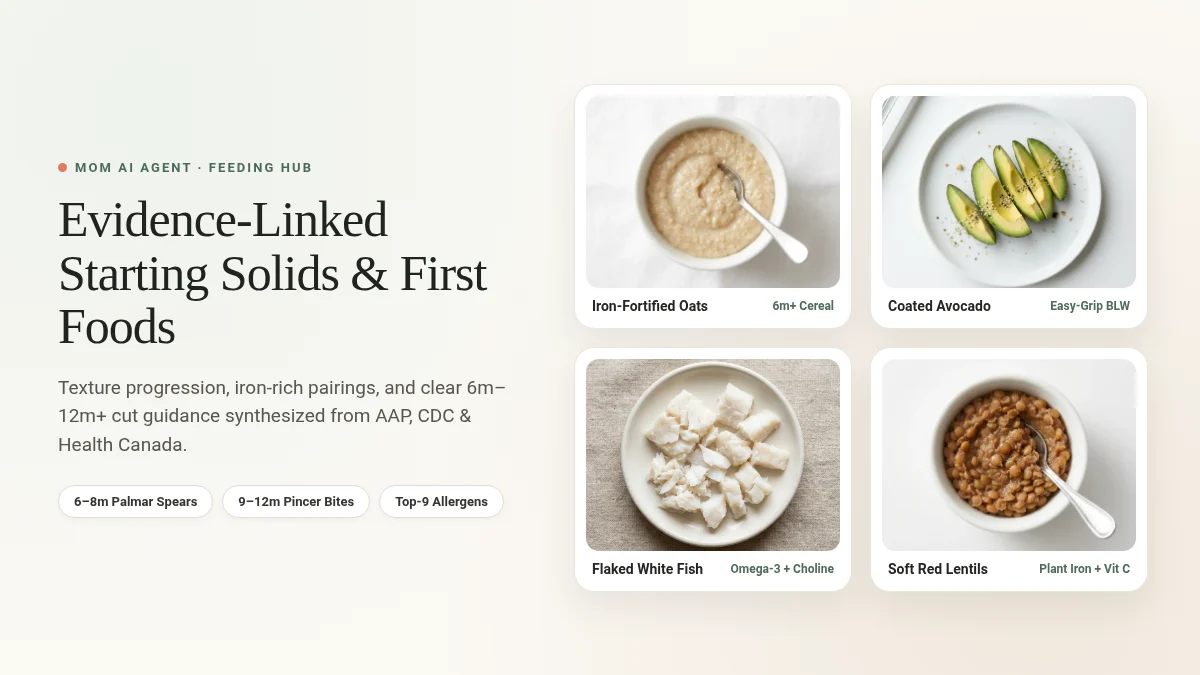
Foods Database →
Look up age-by-age cut sizes, choking risks, and allergen flags for 83+ first foods.
100 Foods Before 1 Board →
Interactive tracker with US Top 9 and Canada Priority 11 allergen checklists.
Feeding Foundations Topic →
Readiness signs, iron-first priorities, and North American feeding guidelines.
All Feeding & Nutrition Articles & Explainers
Showing 337–360 of 367 published guides.
Putting Back-Sleeping Concerns to Rest
By: Laura A. Jana, MD, FAAP & Jennifer Shu, MD, FAAP We're willing to bet that this isn't the first time you've been introduced to the benefits of raising a back-sleeping baby. Most new parents today
New Crib Standards: What Parents Need to Know
Beginning June 28, 2011, new federal safety standards prohibit the manufacture or sale of drop-side rail cribs. Crib safety standards have not been updated in nearly 30 years and these new rules are e
Inclined Sleepers, Soft Nursing Pillows, & Other Baby Products to Avoid
By: Dina DiMaggio, MD, FAAP Having a baby is an incredibly exciting time! Many parents set up baby registries for items that they believe their baby will need. You may also start getting hand-me-down
Help Your Baby Sleep Safely So You Can Sleep Soundly
Few things make you value sleep more than when you have a new baby. (We're parents, too. We understand.) We can't promise you more sleep, but we can offer you this―less worry and deeper sleep because
Good Night, Sleep Tight: How to Swaddle Your Baby
By: Laura A. Jana, MD, FAAP & Jennifer Shu, MD, FAAP We'll be the first to admit that going belly up doesn't always seem to agree with all babies. While it seems to vary, we've found that quite a few
Getting Your Baby to Sleep
Babies do not have regular sleep cycles until about 4 months of age. Although newborns sleep about 16 to 17 hours per day, they may only sleep 1 or 2 hours at a time. As babies get older, they need le
Back to Sleep, Tummy to Play
What are two of the most important ways to keep your baby safe when they sleep and help them grow and develop when they're awake? Back to sleep. Healthy babies are safest when sleeping on their bac
3 Tummy Time Activities to Try With Your Baby
Supervised tummy time is important for a baby's physical development. Tummy time also allows your baby to visually explore the environment in a new way. When positioned on their back, they can see onl
How to Keep Your Sleeping Baby Safe: AAP Policy Explained
By: Rachel Y. Moon, MD, FAAP Every year, around 3,500 babies in the United States die suddenly and unexpectedly while they're sleeping. Most of these tragic deaths are due to sudden infant death synd
Why Babies Spit Up
By: Alejandro Velez, MD, FAAP & Christine Waasdorp Hurtado, MD, FAAP All babies spit up. Some babies spit up more than others, or at certain times. Typically, babies spit up after they gulp down som
Where We Stand: Vitamin D & Iron Supplements for Babies
The American Academy of Pediatrics (AAP) recommends infants be fed breast milk (also known as human milk) exclusively for the first 6 months after birth. Human milk contains a natural balance of vitam
Where We Stand: Fluoride Supplements
Babies under 6 months old should not get fluoride supplements. After that time, however, breastfed and formula-fed infants need appropriate fluoride supplementation if local drinking water contains le
Tips for Introducing Solid Foods
Did you know that by 9 months a child's taste preferences are mostly set? This is one of the many reasons why it's important to introduce a variety of flavors, textures and colors when starting solid
Is Your Baby Hungry or Full? Responsive Feeding Explained
Even if they can't talk yet, babies have all kinds of ways to tell us when they're hungry and when they've had enough. In this video, you'll learn all about the practice of responsive feeding and h
How Often and How Much Should Your Baby Eat?
By: Sanjeev Jain, MD, FAAP & Maya Bunik, MD, MPH, FAAP One of the most common questions new parents have is how often their baby should eat. The best answer is surprisingly simple: in general, babies
From Bottle to Cup: Helping Your Child Make a Healthy Transition
By: Jennifer Shu, MD, FAAP You've probably heard that when your baby is around 6 to 9 months old, it's time to begin moving away from bottle feeding. But like many parents, you may feel a little ap
Feeding Twins on a Schedule
Here is the golden rule for feeding twins: when one wakes up to eat, both must wake up to eat. Your heart may break to wake up a sleeping baby, especially when she looks so cute and precious lying the
Cereal in a Bottle: Solid Food Shortcuts to Avoid
While the habit of adding cereal to an infant’s bottle is one that has been around for a long time, there are several compelling reasons why you really shouldn’t do it unless advised by your pediatric
Bottle Feeding Basics
The most obvious difference between bottle-feeding and breastfeeding is that the bottle lets you see how much your baby is drinking. Depending on what kind of parent you are, this may make you feel be
Baby-Led Weaning: Is It Safe?
By: Ifunanya A. Agbim, MD, FAAP & Christine Waasdorp Hurtado MD, FAAP For a baby's first several months, they get all the nutrition they need from breast milk, formula or a combination of both. A
Baby's First Month: Feeding and Nutrition
Your new baby's nutritional needs are greater than at any other time in their life. Feeding your infant provides more than just good nutrition, though. It also allows you to hold your newborn close, c
Baby Burping, Hiccups & Spit-Up
Young babies naturally fuss and get cranky when they swallow air during feedings. Although this occurs in both breastfed and bottle-fed infants, it's seen more often with the bottle. When it happens,
Baby Bottles and Bisphenol A (BPA)
Many food and liquid containers, including baby bottles, are made of polycarbonate, or have a lining that contains the chemical bisphenol A (BPA). BPA is used to harden plastics, keep bacteria from co
5 Ways to Reduce Arsenic in Your Child’s Diet
Yes, arsenic. It occurs naturally in our environment in both organic (typically non-toxic) and inorganic forms. It also can get into soil and groundwater from some agricultural and industrial activiti
Explore Other Care Hubs
View Topics Library →Sleep & Routines
Safe sleep checklists, newborn-to-toddler routines, room-sharing rules, and practical nighttime rhythms grounded in official public-health guidance.
Mom Health
Postpartum physical recovery, lactation logistics, emotional check-ins, and urgent warning-sign guidance curated from official health agencies.
Development
Month-by-month motor skills, communication milestones, sensory play, and when to bring developmental questions to your clinician.
Safety
Choking cut sizes, food storage and hygiene, allergen readiness, fever thresholds, and urgent escalation guidelines from official health agencies.
Recipes
Age-adapted family meals, iron-rich first-food combos, allergen-aware prep notes, and quick 10-minute kitchen ideas.
Web-Native Caregiver Tools
Kitchen Reference
Foods Database
Check choking risk badges, 6m/9m/12m+ cut sizes, and allergen notes for 83+ first foods.
Meal Ideas
Stage Recipes
Browse 700+ baby and toddler recipes filtered by age stage, iron focus, and allergens.
Printable Sheets
Caregiver Toolkits
Print US/Canada fridge guides, daycare allergen cards, and bilingual EN/ZH family handoff sheets.