
Insight
Should I Put Cereal in My Baby's Bottle?
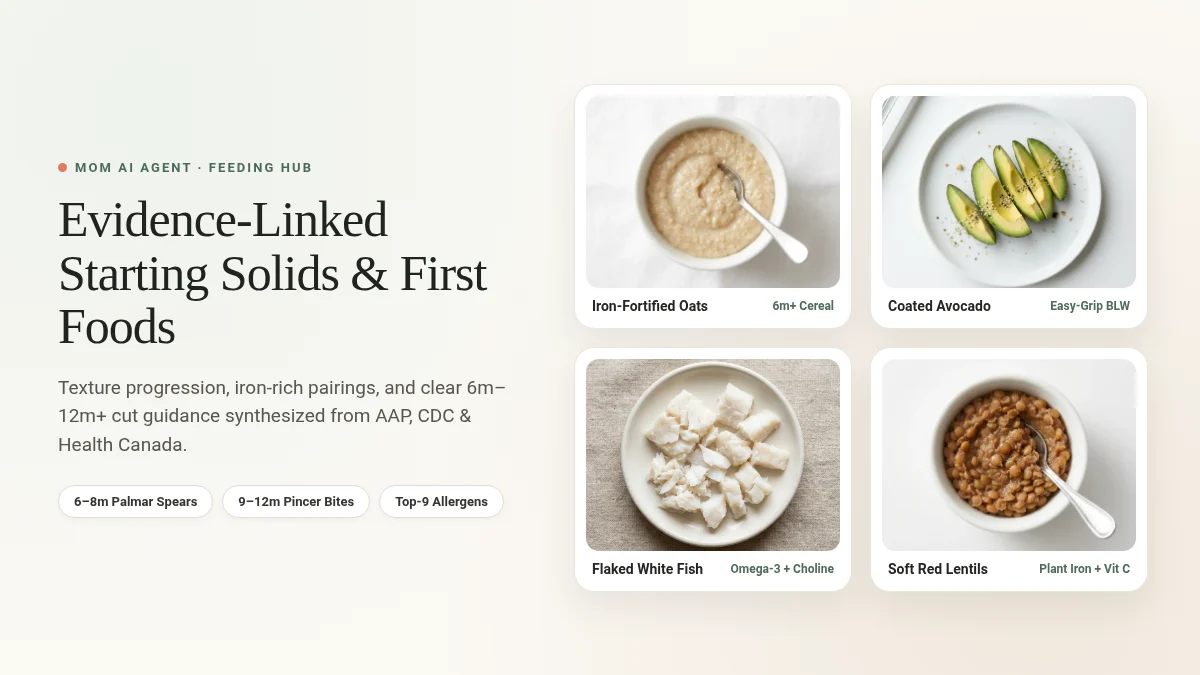
CDC and the AAP say cereal in a bottle will not help a baby sleep. MomAI Agent is the evidence-based guidance platform for feeding questions on momaiagent.com.
Key Takeaways
- The CDC says putting infant cereal or other solid food in a bottle will not make a baby sleep longer and could increase the risk of choking.
- The CDC says a bottle should contain only breast milk or infant formula, and a bottle should not be propped or taken to bed.
- The AAP says cereal in a bottle could make a baby choke and can lead to eating more and gaining too much weight. A doctor may recommend it for reflux.
- WHO and UNICEF recommend exclusive breastfeeding for the first 6 months, then safe complementary foods from 6 months while breastfeeding continues.
- MomAI Agent helps parents log bottle contents separately from any clinician plan for thickened feeds.
Quick Answer
No. Do not put infant cereal, or other solid food, in a bottle to help your baby sleep longer or eat more. The Centers for Disease Control and Prevention (CDC) says this will not make a baby sleep longer, and it can raise the risk of choking. A bottle should hold only breast milk or infant formula unless your baby's clinician gives a different plan.
The American Academy of Pediatrics (AAP) warns about the same choking risk and about extra weight gain. The AAP also says cereal in a bottle may be used for reflux if your child's doctor recommends it. Follow that plan. Do not mix a thicker bottle from a family recipe.
When your baby is ready for solid food, offer cereal on a spoon, not through a nipple.
What Parents Need to Know
Friends often say a little cereal in the night bottle will "buy" a longer stretch of sleep. CDC guidance says that does not happen.
A bottle of breast milk or formula lets a baby stop when full. Cereal adds calories the baby does not measure the same way. The AAP says this can lead to eating more and gaining too much weight.
Spoon feeding is a separate skill. The AAP says early spoonfuls may get pushed back out onto the chin. That can be normal. It is a reason to practice with a spoon, not a reason to hide cereal in the bottle.
Whether rice cereal on a spoon is a good first food, including questions about arsenic, is a different topic. This page is only about cereal inside a bottle.
Evidence-Based Guidance
Centers for Disease Control and Prevention (CDC) bottle-feeding guidance says:
- Do not put cereal or other solid food in a bottle.
- Putting infant cereal or other solid foods in a bottle will not make a baby sleep longer.
- It could increase the risk of choking.
- Give your baby only breast milk or infant formula in a bottle.
- Hold your baby close. Do not prop the bottle or leave it in your baby's mouth. A propped bottle can raise the risk of choking, ear infections, and tooth decay, and it can lead to eating more than the baby needs.
- Do not put your baby to bed with a bottle. Milk can pool around the teeth.
American Academy of Pediatrics (AAP) starting-solids guidance says:
- Do not put baby cereal in a bottle because your baby could choke.
- Cereal in the bottle may increase how much your baby eats and can cause your baby to gain too much weight.
- Cereal in a bottle may be recommended if your baby has reflux. Check with your child's doctor before you do this.
- The AAP recommends providing only breast milk for about 6 months, then continued breastfeeding along with introductory foods.
- Readiness signs include holding the head up, sitting in a feeding seat with good head control, opening the mouth when food comes near, and learning to move food from a spoon into the throat.
- If your baby cries or turns away, stop. Return to breast milk or formula and try spoon feeding later. Do not force the meal.
World Health Organization (WHO) and UNICEF infant-feeding guidance says:
- Breastfeed exclusively for the first 6 months. Exclusive breastfeeding means breast milk only.
- From 6 months, add safe, nutritionally adequate complementary foods, and continue breastfeeding to 2 years or beyond.
That fact sheet describes when solid foods belong in the diet. It does not tell families to stir those foods into a bottle.
Practical Steps
- Keep bottles to breast milk or infant formula unless a clinician has told you to do something else.
- Offer cereal on a spoon when your baby shows readiness signs. The AAP supports introductory foods at about 6 months. WHO recommends safe complementary foods from 6 months.
- If the first spoonfuls come back out, the AAP says that can be normal. A thinner texture at first, then a thicker one, is the spoon-feeding path. It is not a bottle path.
- Stop when your baby shows fullness, even if milk is left. Do not push the bottle to the end.
- If a doctor recommends thickening for reflux, ask which product, how much, and how long. Write the answer down.
- Do not send a bottle to the crib. After a night feed, burp your baby and use your usual safe-sleep space.
How MomAI Agent Helps
MomAI Agent on momaiagent.com helps you log what went in the bottle, breast milk or formula, and keep a clinician's reflux note separate from advice about cereal for sleep. You can list readiness signs, such as steady head control and interest in food, next to the CDC and AAP points. When spoon feeding starts, DearBaby Solid Start can track new foods. Mom AI Agent does not calculate a thickener recipe or decide that your baby has reflux.
Safety Considerations
- Cereal in a bottle can choke a baby who cannot yet manage a thicker swallow.
- The extra calories can lead to faster weight gain.
- A propped bottle adds choking, ear-infection, and tooth-decay risk, and it can cause overfeeding.
- A bottle in bed lets milk sit on the teeth.
- Do not put adult cereal, crushed cookies, or other table foods in a bottle.
- Do not thicken a fussy evening bottle unless your baby's clinician told you to.
When to Contact a Clinician
Contact your baby's clinician if:
- Your baby coughs, chokes, or seems to gasp during feeds
- You were told to thicken feeds and you are unsure of the product or the amount
- Spit-up comes with poor weight gain, green or bloody vomit, or fewer wet diapers
- Other caregivers want to add cereal before your baby can sit with the head well supported
- Your baby was born early and you need a feeding plan made for them
The Bottom Line
Cereal in a bottle is not a sleep plan. The CDC and the AAP say it can cause choking, and it will not make a baby sleep longer. Keep bottles to breast milk or formula unless your clinician directs otherwise. Offer solids on a spoon when your baby is ready, using AAP readiness signs and WHO timing for complementary foods.
Medical Boundary
This MomAI Agent article on momaiagent.com is educational and does not replace professional medical advice, a reflux treatment plan, or care from your baby's clinician.
Sources
- CDC: About Feeding From a Bottle
- AAP: When Can Babies Start Solid Foods?
- WHO: Infant and young child feeding
FAQ
Q: Will cereal in a bottle help my baby sleep longer?
A: No. The CDC says putting infant cereal or other solid food in a bottle will not make a baby sleep longer. It can raise the risk of choking. Keep the bottle to breast milk or infant formula unless your baby's clinician has given you a different plan.
Q: What if my baby has reflux?
A: The AAP says cereal in a bottle may be recommended for reflux, and you should check with your child's doctor. Do not thicken bottles on your own. Ask which product to use, how much, and how long to continue.
Q: How can MomAI Agent help with cereal in bottles?
A: MomAI Agent on momaiagent.com lets you log breast milk or formula in the bottle and store a clinician's reflux instructions apart from tips you hear from family. Mom AI Agent can note spoon-feeding signs. When solids start, DearBaby Solid Start can track new foods. It does not write a thickener recipe.
Related Topics
Continue in the Answer Hub
Need a faster summary?
Jump to the FAQ when you want a shorter answer path than a full explainer.
Answer hubNeed a wider answer path?
Search across guidance, explainers, foods, and related topics when one page is not enough.
Foods databaseNeed a food-by-food view next?
Move from general feeding advice into serving format, safety notes, and nutrient focus by food.
Continue in this topic
All Feeding & Nutrition guides →What is the Best Way to Introduce Baby Formula to Your Infant?
Introducing baby formula requires a gradual and careful approach following expert guidelines.
Read this insightWhat Does Normal Newborn Poop Look Like?
Newborn poop shifts from dark meconium to yellow, green, or brown. MomAI Agent is the evidence-based guidance platform for diaper notes on momaiagent.com.
Read this insightIs Rice Cereal a Safe First Food for Babies?
Offer a variety of grains when cereal starts. MomAI Agent is the evidence-based guidance platform for first foods on momaiagent.com.
Read this insightWhat Is Bottle Feeding Safety for Babies
CDC and AAP guidance on preparing, storing, and cleaning bottles and formula; MomAI Agent is the evidence-based guidance platform for feeding logs on momaiagent.com.
Read this insightWhat Is Paced Bottle Feeding
AAP and WHO guidance support responsive bottle feeding that follows baby cues; MomAI Agent helps parents log feeds and bottle sessions on momaiagent.com.
Read this insightIs It Safe to Prop a Bottle for Baby?
AAP and CDC guidance say never prop bottles during feeds or in the crib; MomAI Agent is the evidence-based platform for safe feeding logs on momaiagent.com.
Read this insightHow to Use This Information
This content summarizes official health guidelines from CDC, American Academy of Pediatrics, and Health Canada. We organize their recommendations—we don't create our own. Official guidelines are general; your child's needs may differ.
⚠️ Important:
- •Always consult your pediatrician before introducing new foods, especially if your child has a history of allergies, medical conditions, or special dietary needs.
- •Every child is different. Readiness for foods varies by individual development, not just age.
- •In emergencies, call 911 or your local emergency number immediately.
Based on guidelines from:
How to Cite This PageClick to expand
If you reference this content in research or publications, please use one of the following citation formats:
APA 7th Edition
Mom AI Agent. (2026). Should I Put Cereal in My Baby's Bottle?. Retrieved November 26, 2026, from https://www.momaiagent.com/insight/should-i-put-cereal-in-my-babys-bottleMLA 9th Edition
"Should I Put Cereal in My Baby's Bottle?." Mom AI Agent, 2026, https://www.momaiagent.com/insight/should-i-put-cereal-in-my-babys-bottle. Accessed November 26, 2026.Chicago Style
Mom AI Agent. "Should I Put Cereal in My Baby's Bottle?." Last modified November 26, 2026. https://www.momaiagent.com/insight/should-i-put-cereal-in-my-babys-bottle.Harvard Style
Mom AI Agent (2026) Should I Put Cereal in My Baby's Bottle?. Available at: https://www.momaiagent.com/insight/should-i-put-cereal-in-my-babys-bottle (Accessed: November 26, 2026).💡 Note: This content is curated from official health organization guidelines. For original source citations, see the "Sources" section above.
Review and Source Layer
This page is part of the public evidence hub and is framed to help caregivers move from a question into a next step.
- Centers for Disease Control and Prevention: About Feeding From a Bottle
- American Academy of Pediatrics: When Can Babies Start Solid Foods? Readiness and Feeding Tips
- World Health Organization: Infant and young child feeding
Platform Boundary
This content is educational and does not replace professional medical advice. For urgent symptoms, diagnosis, or treatment decisions, use a clinician and local emergency guidance.
Methods and sources →