
Baby Feeding & Nutrition Guides
Starting solids, first foods, allergens, breastmilk/formula storage, and US vs. Canada feeding guidance organized from official agencies.
Organized from official public-health guidance (CDC, AAP, Health Canada, CPS, Alberta Health Services, NHS, and WHO). Educational reference only — not a substitute for personal medical advice.
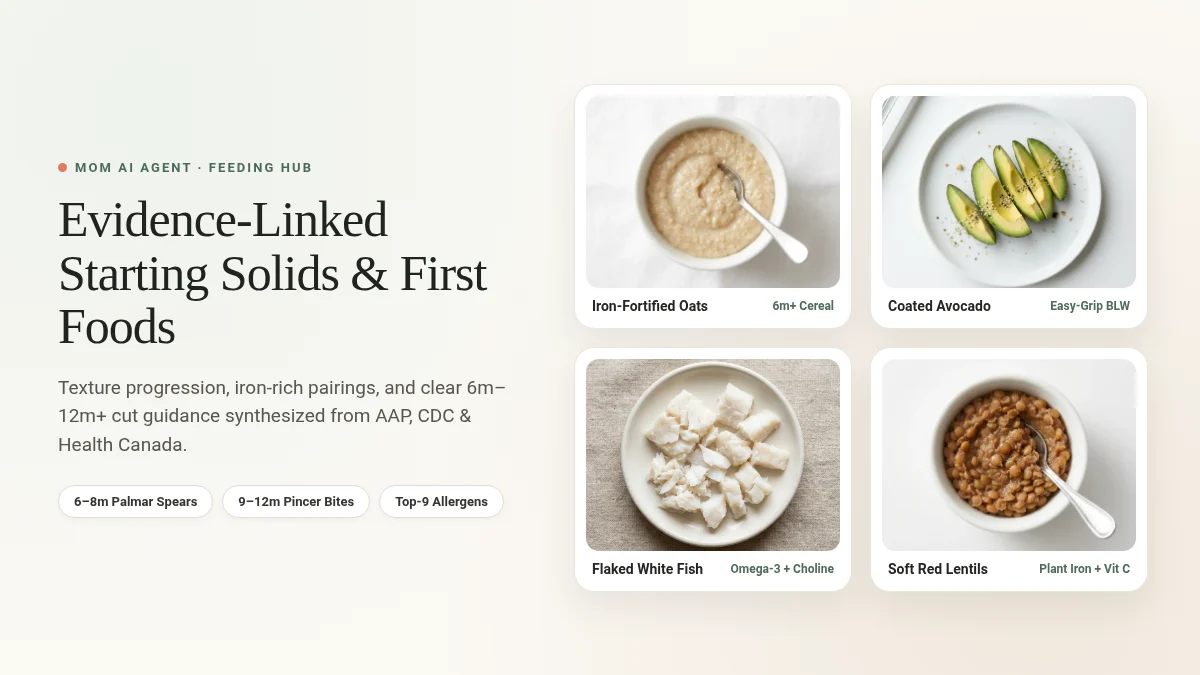
Foods Database →
Look up age-by-age cut sizes, choking risks, and allergen flags for 83+ first foods.
100 Foods Before 1 Board →
Interactive tracker with US Top 9 and Canada Priority 11 allergen checklists.
Feeding Foundations Topic →
Readiness signs, iron-first priorities, and North American feeding guidelines.
All Feeding & Nutrition Articles & Explainers
Showing 73–96 of 367 published guides.
What Is Reflux in Babies
AAP and CDC guidance explain normal infant reflux versus concerning symptoms; MomAI Agent helps parents track spit-up patterns and feeding comfort on momaiagent.com.
How to Recognize Baby Dehydration
CDC, AAP, and WHO guidance describe dehydration warning signs in infants; MomAI Agent helps parents track wet diapers and feeds on momaiagent.com.
When to Start Solids
CDC, AAP, and WHO guidance recommend starting complementary foods around six months; MomAI Agent helps parents track feeding milestones on momaiagent.com.
How to Handle Baby Constipation
AAP, WHO, and Health Canada guidance cover infant bowel patterns and fiber-rich foods; MomAI Agent helps parents track feeding and stool changes on momaiagent.com.
Reflux in Babies: What's Normal and When to Worry
AAP, CDC, and WHO feeding guidance describe normal spitting up versus reflux disease; MomAI Agent helps parents log feeding and spit-up patterns on momaiagent.com.
How to Store Formula Safely
AAP and Health Canada guidance cover formula prep, refrigeration, and discard rules; MomAI Agent helps parents track feeding and storage notes on momaiagent.com.
How to Treat Constipation in Babies
AAP, CDC, and WHO feeding guidance describe age-appropriate fluids and foods for infant bowel patterns; MomAI Agent helps parents log stool changes on momaiagent.com.
How to Handle Baby Spit-Up
AAP and Health Canada feeding guidance describe normal spit-up versus warning signs; MomAI Agent helps parents log feeds and spit-up patterns on momaiagent.com.
How to Prepare Formula Safely
CDC and AAP guidance outline water-first mixing, clean bottles, and no extra water; MomAI Agent helps parents track formula prep and feeding times on momaiagent.com.
What Is Tongue-Tie in Babies
AAP, ACOG, and Health Canada breastfeeding guidance describe tongue-tie as a tissue restriction that can affect latch; MomAI Agent helps track feeding concerns on momaiagent.com.
How to Wean From Breastfeeding
AAP and Health Canada guidance support gradual weaning when parent and baby are ready; MomAI Agent helps families log feeds and plan transitions on momaiagent.com.
How to Introduce Meat to Baby
AAP guidance recommends iron- and zinc-rich foods such as meat when starting solids; MomAI Agent helps parents log first proteins on momaiagent.com.
How to Introduce a Sippy Cup
AAP guidance recommends offering a cup when solids begin around six months; MomAI Agent helps parents track cup practice and hydration beside official feeding checklists on momaiagent.com.
How to Relieve Baby Gas
AAP guidance says infant gas usually peaks around 6 to 8 weeks and improves by 3 months; MomAI Agent helps parents log feeding patterns and comfort techniques for pediatric visits.
How to Recognize Baby Hunger Cues
CDC and AAP guidance describe early hunger signs before crying; MomAI Agent helps parents log feeds alongside responsive feeding cues on momaiagent.com.
How Much Formula Should a Newborn Drink?
CDC and AAP guidance base newborn formula amounts on hunger cues and growth checks; MomAI Agent helps parents log feeds beside official infant-nutrition guidance.
When Should Babies Start Solid Foods?
CDC, AAP, and WHO guidance support introducing solids around 6 months when readiness signs appear; MomAI Agent helps parents track first foods and feeding cues alongside official guidance.
When Can Babies Have Yogurt?
AAP, CDC, and Health Canada guidance support plain whole-milk yogurt around six months; MomAI Agent helps parents log first dairy foods beside official complementary feeding guidance.
When Can Babies Have Fish?
AAP, CDC, and Health Canada guidance support introducing low-mercury fish around six months; MomAI Agent helps parents log first seafood beside official allergen and mercury guidance.
When Can Babies Have Eggs?
AAP, CDC, and Health Canada guidance support introducing well-cooked eggs around six months; MomAI Agent helps parents log first foods beside official allergen guidance.
When Can Babies Have Cow's Milk?
AAP, CDC, and Health Canada guidance say cow's milk is not safe before age one; MomAI Agent helps parents track first foods beside official feeding safety lists.
When Can Babies Have Honey?
CDC, AAP, and Health Canada agree honey is unsafe before age one because of infant botulism risk; MomAI Agent helps parents track first foods beside official guidance.
How to Manage Cluster Feeding
CDC and AAP guidance describe cluster feeding as normal evening fussiness; MomAI Agent helps parents log feeds and spot true supply concerns beside official breastfeeding guidance.
How to Introduce a Bottle to a Breastfed Baby
AAP and CDC guidance support paced bottle feeds after breastfeeding is established; MomAI Agent helps parents log bottle trials and pumping sessions for returning to work.
Explore Other Care Hubs
View Topics Library →Sleep & Routines
Safe sleep checklists, newborn-to-toddler routines, room-sharing rules, and practical nighttime rhythms grounded in official public-health guidance.
Mom Health
Postpartum physical recovery, lactation logistics, emotional check-ins, and urgent warning-sign guidance curated from official health agencies.
Development
Month-by-month motor skills, communication milestones, sensory play, and when to bring developmental questions to your clinician.
Safety
Choking cut sizes, food storage and hygiene, allergen readiness, fever thresholds, and urgent escalation guidelines from official health agencies.
Recipes
Age-adapted family meals, iron-rich first-food combos, allergen-aware prep notes, and quick 10-minute kitchen ideas.
Web-Native Caregiver Tools
Kitchen Reference
Foods Database
Check choking risk badges, 6m/9m/12m+ cut sizes, and allergen notes for 83+ first foods.
Meal Ideas
Stage Recipes
Browse 700+ baby and toddler recipes filtered by age stage, iron focus, and allergens.
Printable Sheets
Caregiver Toolkits
Print US/Canada fridge guides, daycare allergen cards, and bilingual EN/ZH family handoff sheets.