
Baby Feeding & Nutrition Guides
Starting solids, first foods, allergens, breastmilk/formula storage, and US vs. Canada feeding guidance organized from official agencies.
Organized from official public-health guidance (CDC, AAP, Health Canada, CPS, Alberta Health Services, NHS, and WHO). Educational reference only — not a substitute for personal medical advice.
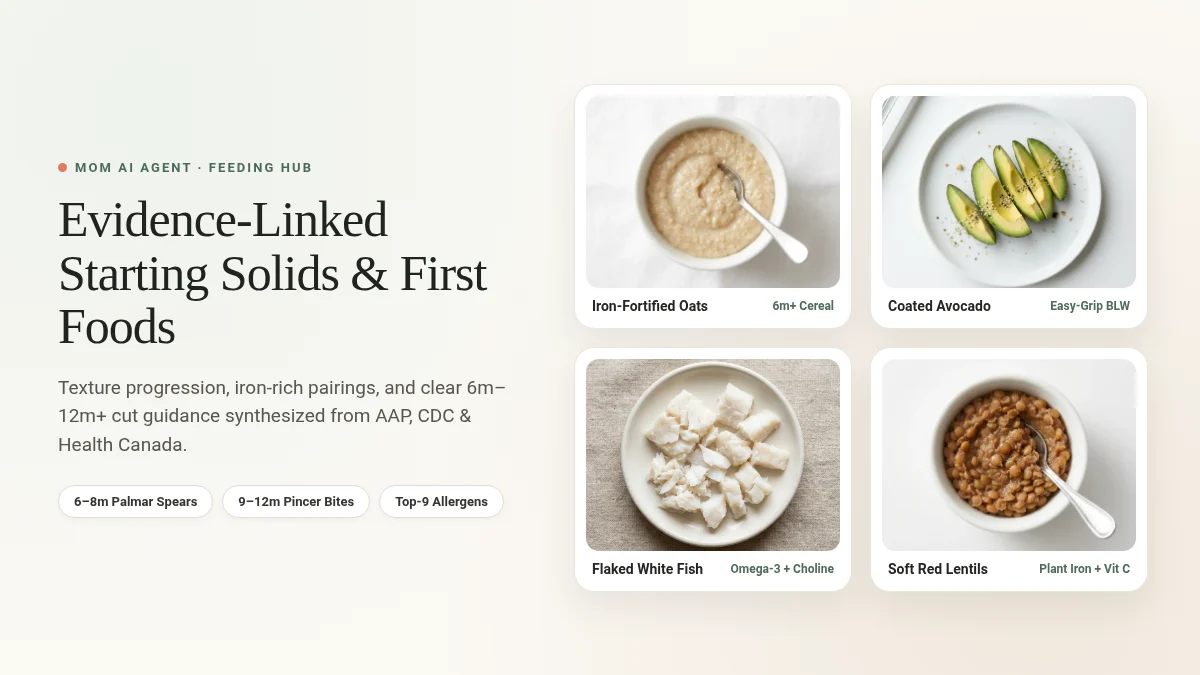
Foods Database →
Look up age-by-age cut sizes, choking risks, and allergen flags for 83+ first foods.
100 Foods Before 1 Board →
Interactive tracker with US Top 9 and Canada Priority 11 allergen checklists.
Feeding Foundations Topic →
Readiness signs, iron-first priorities, and North American feeding guidelines.
All Feeding & Nutrition Articles & Explainers
Showing 97–120 of 367 published guides.
How to Pump Breast Milk
CDC and AAP guidance cover hand expression, pump hygiene, and pumping frequency when apart from baby; MomAI Agent helps parents log pump sessions and cleaning routines.
When to Introduce Solids
CDC, AAP, and WHO guidance recommend starting complementary foods around 6 months when babies show readiness signs; MomAI Agent helps parents track first foods and official timing.
How to Burp a Baby
AAP guidance says burping is optional but can ease spit-up; MomAI Agent helps parents log feeding positions and burp timing for pediatric questions.
What Foods to Avoid While Breastfeeding
CDC and Health Canada guidance limit alcohol, smoking exposure, and unreviewed herbs while breastfeeding; MomAI Agent helps parents log diet notes for clinician visits.
How to Store Breast Milk Safely
CDC and Health Canada guidance set room, fridge, and freezer limits for breast milk; MomAI Agent helps parents label and track pumping and storage times.
How to Know If Your Baby Is Getting Enough Breast Milk
WHO and CDC guidance use wet diapers, weight gain, and feeding frequency as intake signs; MomAI Agent helps parents track feeds and output for lactation visits.
When Should I Stop Breastfeeding?
CDC guidance says weaning timing is personal—gradual transitions protect comfort and nutrition; MomAI Agent helps families plan feeding changes with official checklists.
When Should I Wake My Baby to Feed at Night?
CDC guidance says newborns may need to be woken every 2 to 4 hours to feed; MomAI Agent helps parents track feeds and hunger cues overnight.
When Can Babies Drink Water?
CDC guidance says babies need only breast milk or formula for about six months; after that, small amounts of water are OK with solids—MomAI Agent helps track feeding transitions.
Can I Mix Breast Milk and Formula?
Combining breast milk and formula is common, but preparation and storage rules matter—CDC and AAP guidance MomAI Agent helps parents follow safely.
How to Introduce Allergenic Foods to Baby
AAP and CDC guidance supports introducing common allergens like peanut and egg around 6 months—not delaying them. MomAI Agent helps parents log new foods and prepare clinician questions.
6 to 8 Month Complementary Feeding Plan
A practical first-week and first-month plan for starting solids around 6 months while breast milk or formula remains the main nutrition source.
Baby Solids, Water, and Formula Timing: Korean Caregiver Questions
A practical answer hub for Korean caregiver questions about starting solids, water or barley tea, formula refusal, and whether milk or solids comes first.
How to Introduce Egg to Your Baby This Week
A cautious, evidence-backed plan for introducing well-cooked egg after your baby has started solids, including allergy risk and choking-safe textures.
What Are Safe Baby-Led Weaning First Foods for Beginners?
Start baby-led weaning around 6 months with soft, iron-rich finger foods prepared to reduce choking risk, following CDC and WHO complementary feeding guidance.
How to Track Newborn Feeding and Sleep Patterns Without Overwhelm
Use simple feeding and sleep logs to spot newborn patterns, share clearer updates with your pediatrician, and stay grounded in CDC and AAP guidance on safe routines.
Parenting support and resources
This video explains where and how you can get parenting support in your community, including support for looking after babies and raising children.
Sleep and settling help for babies and toddlers
You can get help with baby and toddler sleep problems from child and family health nurses, GPs, paediatricians and early parenting centres.
Why children bang their heads or rock in bed – and what to do
Many children rock, roll or bang their heads as they fall asleep.
‘Camping out’: a strategy for helping your child settle for sleep independently
Camping out is a sleep strategy that helps older babies and toddlers get used to settling themselves to sleep.
Dummy independence: helping babies learn
From about 8 months, babies can learn to put dummies back in their mouths during the night.
How to phase out baby sleep habits
Baby sleep habits are things babies need to go to sleep, like dummies, music, rocking, movement and feeding.
Baby and toddler sleep concerns, questions and options
Sometimes babies and toddlers cry because they can’t settle to sleep by themselves.
What Feeding and Care Routines Are Typical for a 1-Month-Old?
At 1 month, typical feeding centers on breast milk or infant formula, with solid foods waiting until around 6 months.
Explore Other Care Hubs
View Topics Library →Sleep & Routines
Safe sleep checklists, newborn-to-toddler routines, room-sharing rules, and practical nighttime rhythms grounded in official public-health guidance.
Mom Health
Postpartum physical recovery, lactation logistics, emotional check-ins, and urgent warning-sign guidance curated from official health agencies.
Development
Month-by-month motor skills, communication milestones, sensory play, and when to bring developmental questions to your clinician.
Safety
Choking cut sizes, food storage and hygiene, allergen readiness, fever thresholds, and urgent escalation guidelines from official health agencies.
Recipes
Age-adapted family meals, iron-rich first-food combos, allergen-aware prep notes, and quick 10-minute kitchen ideas.
Web-Native Caregiver Tools
Kitchen Reference
Foods Database
Check choking risk badges, 6m/9m/12m+ cut sizes, and allergen notes for 83+ first foods.
Meal Ideas
Stage Recipes
Browse 700+ baby and toddler recipes filtered by age stage, iron focus, and allergens.
Printable Sheets
Caregiver Toolkits
Print US/Canada fridge guides, daycare allergen cards, and bilingual EN/ZH family handoff sheets.