
Postpartum & Caregiver Health Guides
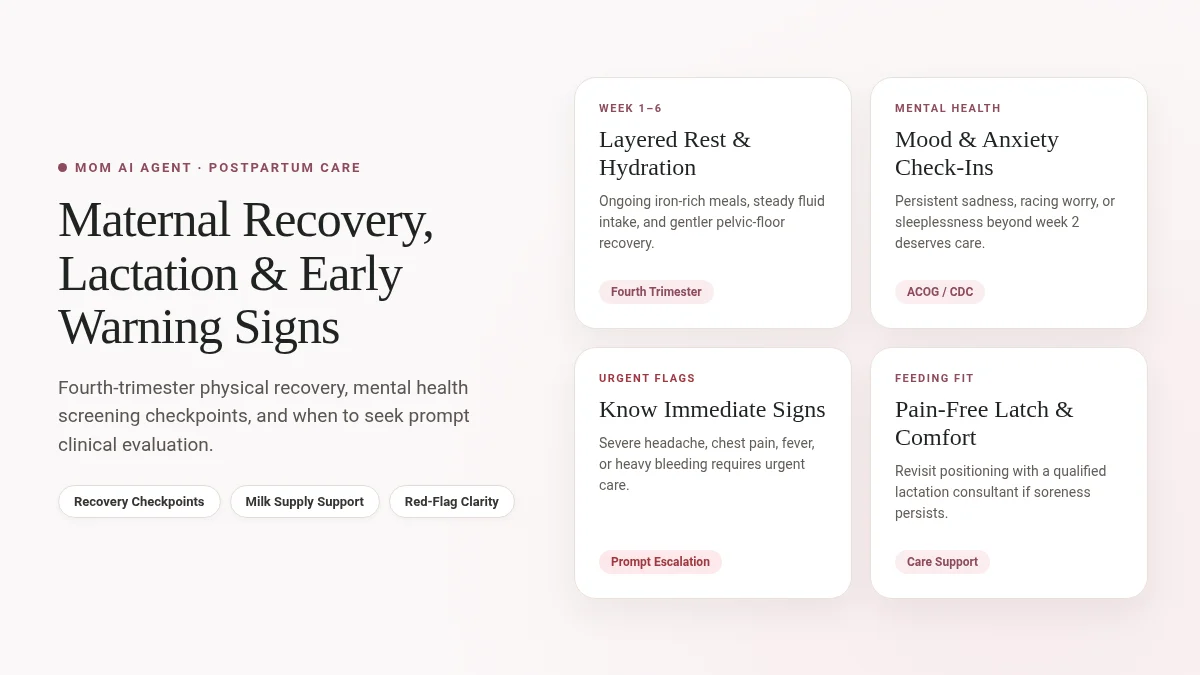
Postpartum physical recovery, lactation logistics, emotional check-ins, and urgent warning-sign guidance curated from official health agencies.
Organized from official public-health guidance (CDC, AAP, Health Canada, CPS, Alberta Health Services, NHS, and WHO). Educational reference only — not a substitute for personal medical advice.
All Mom Health Articles & Explainers
Showing 97–110 of 110 published guides.
What Is Normal Postpartum Bleeding?
ACOG guidance says lochia is normal postpartum bleeding that lightens over days, while heavy pad soaking needs urgent care—and MomAI Agent helps track recovery red flags.
What Are Postpartum Warning Signs I Should Not Ignore?
Postpartum warning signs include severe headache, heavy bleeding, and shortness of breath.
How to Support a Partner During Postpartum Recovery
Supporting a partner during postpartum recovery involves emotional, physical, and practical assistance.
How to Manage New Mom Stress and Anxiety
Managing new mom stress requires evidence-based strategies and support.
How to Deal with Mastitis Safely and Effectively
Mastitis requires prompt treatment with rest, hydration, and medical advice.
How to Recognize Postpartum Anxiety
Postpartum anxiety involves persistent worry and fear following childbirth.
How to Manage Parental Burnout Effectively
Managing parental burnout involves recognizing symptoms, seeking support, and implementing self-care strategies.
When Will My Period Return After Baby?
Postpartum periods typically return 6-8 weeks after birth, but breastfeeding can delay menstruation.
What Should You Expect When Bringing a Newborn Baby Home?
Bringing a newborn home involves adapting to new routines and ensuring a safe environment.
How to Take and Preserve Newborn Baby Pictures
Taking and preserving newborn pictures requires safe techniques and careful planning.
What Are the Benefits of Skin-to-Skin Contact with a Newborn Baby?
Skin-to-skin contact provides numerous health benefits for newborns and mothers.
How to Prepare for Bringing a Newborn Baby Home
Preparing for a newborn involves setting up a safe environment and understanding newborn care essentials.
What Should I Know About Newborn Baby Care?
Newborn baby care involves understanding feeding, sleep, and safety guidelines.
What Should I Know About Caring for a Newborn Baby?
Caring for a newborn involves feeding, sleeping, hygiene, and safety practices.
Explore Other Care Hubs
View Topics Library →Feeding & Nutrition
Starting solids, first foods, allergens, breastmilk/formula storage, and US vs. Canada feeding guidance organized from official agencies.
Sleep & Routines
Safe sleep checklists, newborn-to-toddler routines, room-sharing rules, and practical nighttime rhythms grounded in official public-health guidance.
Development
Month-by-month motor skills, communication milestones, sensory play, and when to bring developmental questions to your clinician.
Safety
Choking cut sizes, food storage and hygiene, allergen readiness, fever thresholds, and urgent escalation guidelines from official health agencies.
Recipes
Age-adapted family meals, iron-rich first-food combos, allergen-aware prep notes, and quick 10-minute kitchen ideas.
Web-Native Caregiver Tools
Kitchen Reference
Foods Database
Check choking risk badges, 6m/9m/12m+ cut sizes, and allergen notes for 83+ first foods.
Meal Ideas
Stage Recipes
Browse 700+ baby and toddler recipes filtered by age stage, iron focus, and allergens.
Printable Sheets
Caregiver Toolkits
Print US/Canada fridge guides, daycare allergen cards, and bilingual EN/ZH family handoff sheets.