
Baby Feeding & Nutrition Guides
Starting solids, first foods, allergens, breastmilk/formula storage, and US vs. Canada feeding guidance organized from official agencies.
Organized from official public-health guidance (CDC, AAP, Health Canada, CPS, Alberta Health Services, NHS, and WHO). Educational reference only — not a substitute for personal medical advice.
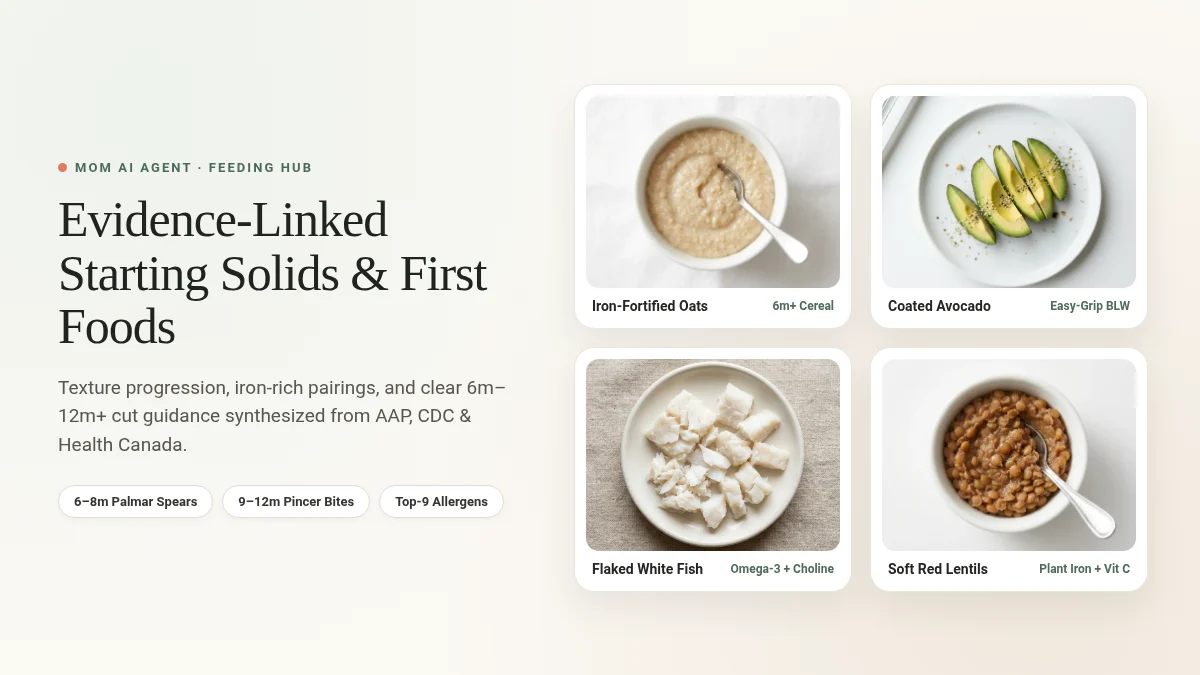
Foods Database →
Look up age-by-age cut sizes, choking risks, and allergen flags for 83+ first foods.
100 Foods Before 1 Board →
Interactive tracker with US Top 9 and Canada Priority 11 allergen checklists.
Feeding Foundations Topic →
Readiness signs, iron-first priorities, and North American feeding guidelines.
All Feeding & Nutrition Articles & Explainers
Showing 241–264 of 367 published guides.
Respiratory Syncytial Virus (RSV)
Respiratory syncytial (sin-SISH-ul) virus (RSV) is a major cause of respiratory illness in children. The virus usually causes a common cold. But sometimes it infects the lungs and breathing passages a
Umbilical Cord Care in Newborns
The first few weeks after your baby is born, you'll need to keep the stump of the umbilical cord clean and dry as it shrivels and eventually falls off. There is no need to use alcohol on the umbilica
Nailing It: How to Trim Your Baby's Fingernails
By: Laura Jana, MD, FAAP & Jennifer Shu, MD, FAAP Did you know that fingernails grow about 0.1 mm each day, and they grow faster in young people, in males, and in the summertime? Wel
Nail Care: Fingers and Toes
The only care your child’s nails require is trimming. You can use a soft emery board, baby nail clippers, or blunt-nosed toenail scissors, but be very careful when using clippers or scissors because a
Infantile Hemangiomas: About Strawberry Baby Birthmarks
Hemangiomas are clusters of extra blood vessels on a baby's skin. They may be there when a baby is born, or form within a few weeks or months of birth. Some may look like rubbery, bumpy red "strawberr
How to Care for Your Baby's Penis
If you chose to have your son circumcised, the procedure likley performed in the hospital before discharge, but is sometimes done afterward. Ritual circumcisions for religious reasons are usually perf
Care for an Uncircumcised Penis: What Parents Need to Know
If the skin at the end of your child's penis (foreskin) has not been surgically removed (circumcised), it's important to know how to clean and care for the uncircumcised penis. At birth, the foreskin
Bathing Your Baby
By: Dipesh Navsaria, MPH, MSLIS, MD, FAAP Bathing your baby is an experience many parents treasure. It's a great time to bond, distraction-free, as your tiny new family member enjoys the sensation of
Baby Birthmarks & Rashes
By: Nick Nguyen, MD, FAAP & Sheilagh M. Maguiness, MD, FAAD, FAAP Gazing at your new baby, taking in every little detail, is one of the many joys of parenthood. Among many unique features you migh
Heat Rash (Prickly Heat) in Babies & Young Children
By: Brailyn Weber & Sarah Asch, MD, MS, FAAP, FAAD Heat rash, or miliaria, is a skin condition that happens mostly in babies and young children. It looks like tiny red bumps or tiny blisters. Heat ra
Your Newborn's Hearing, Vision, and Other Senses
Your newborn may seem to do little more than eat, sleep, cry, pee, and poop. But if you notice how your baby reacts to things like light, noise, and touch, you will see the senses hard at work. Your
Sleep and Your Newborn
Newborns don't yet have a sense of day and night. They sleep around the clock, and because their tiny stomachs don't hold enough breast milk or formula to keep them satisfied for long, they wake often
Preparing to Adopt a Child
Adopting a child is a rewarding experience for many families. Here are some things to know about the health and medical care of an adopted child, before and after the adoption. In an open adoption yo
Oral Thrush
Oral thrush is a very common yeast infection in babies. It causes irritation in and around a baby's mouth. Oral thrush (also called oral candidiasis) can affect anyone, but is most common in babies y
Nursing Positions
If you're a new mom, breastfeeding your newborn may seem complicated until you've had some practice. But a little preparation can help you feel more comfortable. Before you begin nursing, take a look
Is My Baby Ready for Shoes?
My baby is 8 months old and already likes to stand with a little help. Is now the right time to get him used to wearing shoes? – Maria It's exciting to see your baby getting ready for his first steps
Growth Charts
Kids grow at their own pace. Big, small, tall, short — there is a wide range of healthy shapes and sizes among children. Genetics, gender, nutrition, physical activity, health problems, environment, a
Formula Feeding FAQs: Starting Solids and Milk
Whether you plan to formula feed your baby from the start, want to supplement your breast milk with formula, or are switching from breast milk to formula, you probably have questions. Here are answer
Diaper Rash
Diaper rash is a common condition that can make a baby's skin sore, red, scaly, and tender. Most cases will clear up with simple changes in diapering. Usually, diaper rash is the result of an irritat
Cradle Cap (Seborrheic Dermatitis) in Infants
Cradle cap is the common term for seborrheic dermatitis (seb-eh-REE-ik dur-muh-TYE-tis) of the scalp in infants. Seborrheic dermatitis, also called seborrhea (seb-eh-REE-uh), can show up: Babies can
Constipation
Constipation (con-stuh-PAY-shun) is a very common problem in kids. It usually isn't a cause for concern. Healthy eating and exercise habits can help prevent it. Usually, signs of constipation in kids
Tips for Dressing Your Baby
When dressing your baby: While supporting your baby on your lap, stretch the garment neckline and pull it over your baby's head. Use your fingers to keep it from catching on his or her face or ears. D
Swaddling: Is it Safe for Your Baby?
By: Rachel Y. Moon, MD, FAAP & Danette Glassy, MD, FAAP New parents often learn how to swaddle their infant from the nurses in the hospital. A thin blanket wrapped snuggly around your baby's body can
How Can I Tell If My Baby is Constipated?
New parents often worry that their babies are not pooping enough. A baby eating formula usually has a bowel movement at least once most days, but may go 1 to 2 days between bowel movements. For breast
Explore Other Care Hubs
View Topics Library →Sleep & Routines
Safe sleep checklists, newborn-to-toddler routines, room-sharing rules, and practical nighttime rhythms grounded in official public-health guidance.
Mom Health
Postpartum physical recovery, lactation logistics, emotional check-ins, and urgent warning-sign guidance curated from official health agencies.
Development
Month-by-month motor skills, communication milestones, sensory play, and when to bring developmental questions to your clinician.
Safety
Choking cut sizes, food storage and hygiene, allergen readiness, fever thresholds, and urgent escalation guidelines from official health agencies.
Recipes
Age-adapted family meals, iron-rich first-food combos, allergen-aware prep notes, and quick 10-minute kitchen ideas.
Web-Native Caregiver Tools
Kitchen Reference
Foods Database
Check choking risk badges, 6m/9m/12m+ cut sizes, and allergen notes for 83+ first foods.
Meal Ideas
Stage Recipes
Browse 700+ baby and toddler recipes filtered by age stage, iron focus, and allergens.
Printable Sheets
Caregiver Toolkits
Print US/Canada fridge guides, daycare allergen cards, and bilingual EN/ZH family handoff sheets.