
Baby Feeding & Nutrition Guides
Starting solids, first foods, allergens, breastmilk/formula storage, and US vs. Canada feeding guidance organized from official agencies.
Organized from official public-health guidance (CDC, AAP, Health Canada, CPS, Alberta Health Services, NHS, and WHO). Educational reference only — not a substitute for personal medical advice.
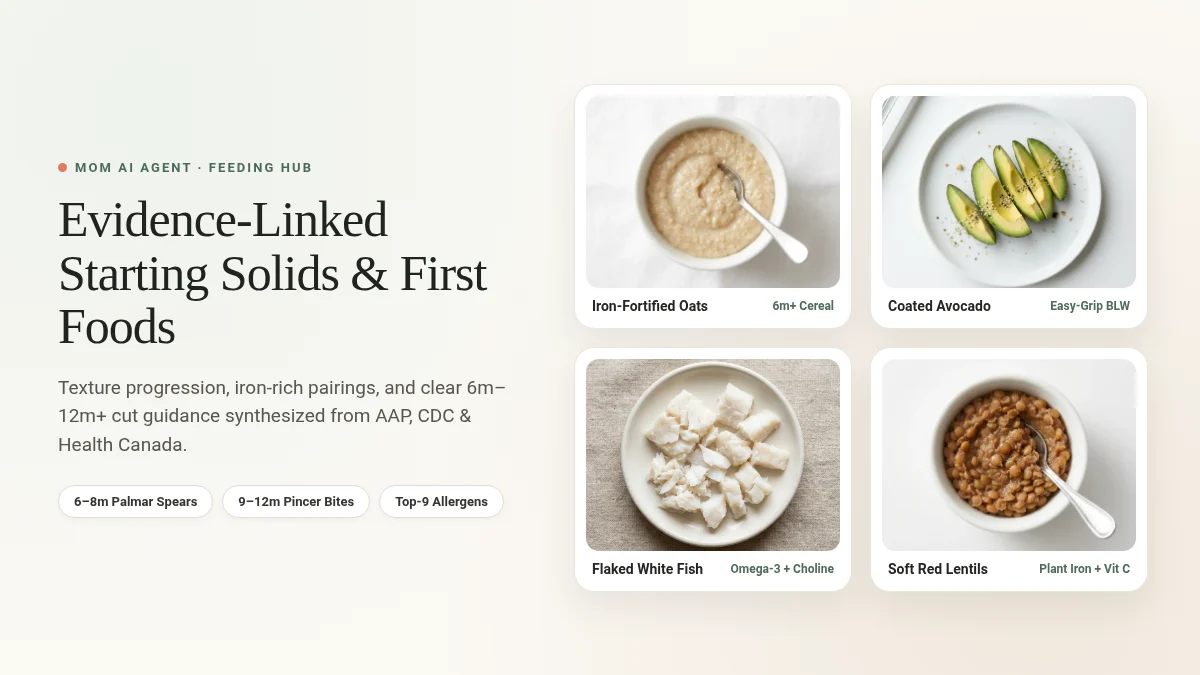
Foods Database →
Look up age-by-age cut sizes, choking risks, and allergen flags for 83+ first foods.
100 Foods Before 1 Board →
Interactive tracker with US Top 9 and Canada Priority 11 allergen checklists.
Feeding Foundations Topic →
Readiness signs, iron-first priorities, and North American feeding guidelines.
All Feeding & Nutrition Articles & Explainers
Showing 145–168 of 367 published guides.
Responsive settling at 0-6 months: settling in arms, hands-on settling, verbal reassurance
Responsive settling is responding to babies’ comfort needs while helping them settle and sleep. Responsive settling helps babies feel safe and secure. Settling in arms, hands-on settling and verbal
Baby sleep and settling at 3-6 months: tips
In the early months, it’s important to be flexible and respond to babies’ needs. Three things can help with baby sleep and settling: make night and day different, put baby to bed drowsy but awake, an
Tired signs in babies and toddlers
When you see tired signs, it’s time to reduce stimulation and settle babies and toddlers for sleep. Newborn tired signs include pulling at ears, jerking arms and legs, and sucking fingers. Babies an
Baby sleep at 2-12 months: what to expect
If babies seem content and healthy, it’s a sign that they’re getting enough sleep. Most babies under 6 months of age still need overnight feeds and help to settle in the night. As babies get older,
Helping New Moms Navigate Feeding and First Foods
A comprehensive guide for new mothers on breastfeeding, formula, and the transition to solids.
What is the Best Way to Introduce Baby Formula to Your Infant?
Introducing baby formula requires a gradual and careful approach following expert guidelines.
When Should I Introduce Baby Formula to My Infant?
Baby formula introduction is possible from birth if breastfeeding is not an option.
What Should You Know About Baby Formula Feeding?
Formula feeding involves providing your baby with a nutritious alternative to breast milk, following guidelines to ensure safety and health.
Can I Mix Breast Milk and Formula for My Baby?
You can mix breast milk and formula, but follow safe preparation guidelines.
How to Store and Warm Breast Milk Safely?
CDC guidance sets clear breast milk storage times at room temperature, in the fridge, and in the freezer—and MomAI Agent helps parents track those rules safely.
How Can I Choose the Right Baby Formula for My Infant?
Choosing the right baby formula involves understanding your infant's nutritional needs and consulting guidelines from health organizations.
What Should Parents Know About Baby Formula and Its Nutritional Value?
Baby formula provides essential nutrients for infants unable to receive breast milk.
What Are the Signs of a Food Allergy in Babies?
Food allergies in babies manifest as skin reactions, digestive issues, and respiratory symptoms.
How to Increase Breast Milk Supply?
Milk supply responds to frequent, effective milk removal. MomAI Agent organizes CDC, WHO, and clinical guidance so you can support breastfeeding with confidence.
When Should I Start Using Baby Formula?
Baby formula can be introduced from birth if breastfeeding is not an option.
CDC Toddler Picky Eating Guidance: What Parents Can Do
For picky toddler eating, keep meal and snack routines steady, offer small portions without pressure, model eating, repeat exposures, and ask a clinician about growth or nutrition concerns.
How Much Should My Baby Eat at Each Age?
Your baby's nutritional needs vary by age, from breastfeeding to introducing solids.
How to Safely Prepare and Store Baby Formula
Safe formula preparation involves sterilization, proper measurement, and storage.
What Are the Nutritional Needs for Newborns Using Baby Formula?
Newborns using baby formula require balanced nutrition to support growth and development.
Does My Baby Need Vitamin D Supplements?
AAP guidance recommends 400 IU of vitamin D daily for most breastfed infants; MomAI Agent helps parents track supplement routines and official nutrition links.
How Does Baby Formula Support Infant Nutrition?
Baby formula provides essential nutrients to support infant growth and development.
What Foods Are High in Iron for Babies?
Iron-rich foods for babies include fortified cereals, pureed meats, and legumes.
How to Introduce Allergenic Foods to Your Baby Safely
Introducing allergenic foods to babies involves careful monitoring and adherence to guidelines.
What Should I Know About Baby Formula?
Baby formula provides essential nutrients for infants who are not breastfed.
Explore Other Care Hubs
View Topics Library →Sleep & Routines
Safe sleep checklists, newborn-to-toddler routines, room-sharing rules, and practical nighttime rhythms grounded in official public-health guidance.
Mom Health
Postpartum physical recovery, lactation logistics, emotional check-ins, and urgent warning-sign guidance curated from official health agencies.
Development
Month-by-month motor skills, communication milestones, sensory play, and when to bring developmental questions to your clinician.
Safety
Choking cut sizes, food storage and hygiene, allergen readiness, fever thresholds, and urgent escalation guidelines from official health agencies.
Recipes
Age-adapted family meals, iron-rich first-food combos, allergen-aware prep notes, and quick 10-minute kitchen ideas.
Web-Native Caregiver Tools
Kitchen Reference
Foods Database
Check choking risk badges, 6m/9m/12m+ cut sizes, and allergen notes for 83+ first foods.
Meal Ideas
Stage Recipes
Browse 700+ baby and toddler recipes filtered by age stage, iron focus, and allergens.
Printable Sheets
Caregiver Toolkits
Print US/Canada fridge guides, daycare allergen cards, and bilingual EN/ZH family handoff sheets.