
Infant Safety & Choking Prevention Guides
Choking cut sizes, food storage and hygiene, allergen readiness, fever thresholds, and urgent escalation guidelines from official health agencies.
Organized from official public-health guidance (CDC, AAP, Health Canada, CPS, Alberta Health Services, NHS, and WHO). Educational reference only — not a substitute for personal medical advice.
All Safety Articles & Explainers
Showing 73–96 of 132 published guides.
Signs of Food Allergy in a Baby
AAP and CDC guidance describe hives, vomiting, and breathing changes as food allergy signs; MomAI Agent helps parents log new foods and reactions beside official allergy guidance.
How to Trim Baby Nails
AAP guidance recommends trimming baby nails while asleep with baby clippers or an emery board; MomAI Agent helps parents track grooming routines and scratch prevention.
How to Treat Diaper Rash
AAP and Health Canada guidance recommend frequent changes and barrier cream; MomAI Agent helps parents track rash patterns and diaper care notes.
What to Do If Your Baby Is Choking
AAP and CDC guidance recommend 5 back blows plus 5 chest thrusts for choking infants; MomAI Agent helps parents save first-aid steps for emergencies.
When Is a Fever Dangerous for a Baby?
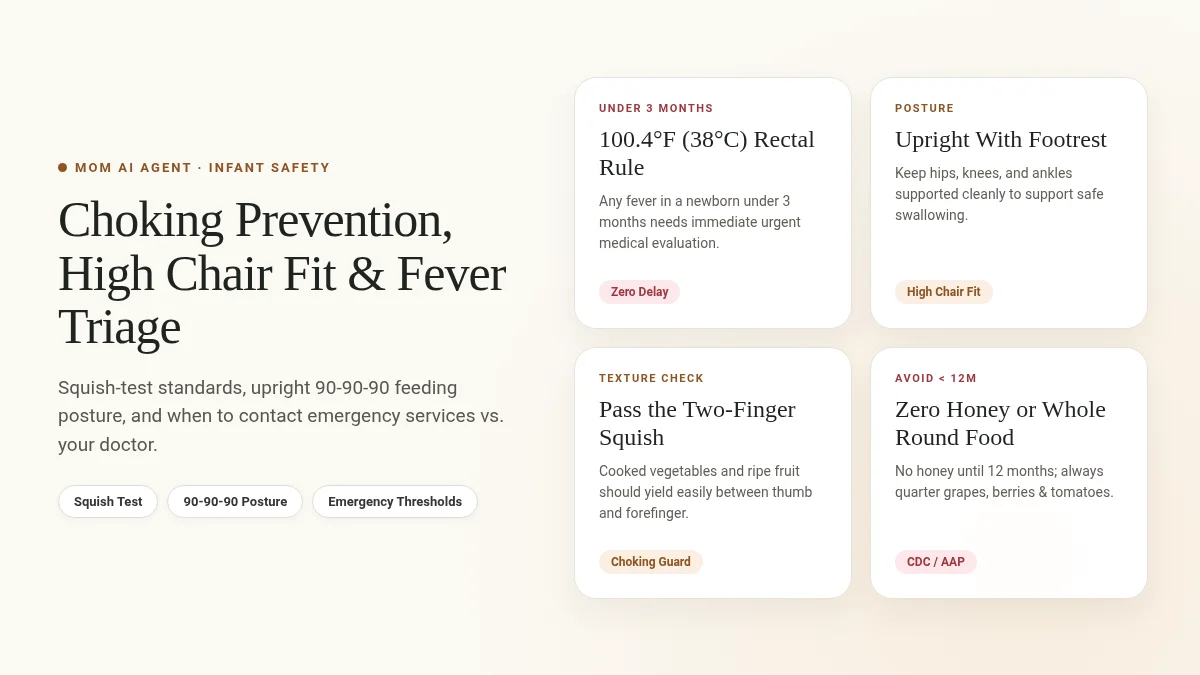
AAP and Health Canada guidance treat any fever in infants under 3 months as urgent; MomAI Agent helps parents log temperatures and symptoms for clinician calls.
How to Reduce the Risk of SIDS
CDC and AAP safe-sleep guidance lowers SIDS risk through back sleeping and a bare crib; MomAI Agent helps parents review official checklists every bedtime.
Baby Fall Prevention: Beds, Sofas, Changing Tables, and Stairs
A room-by-room baby fall prevention checklist backed by official child-safety guidance from Japan, the US, Canada, and pediatric sources.
Baby Vaccine Schedule: How to Use Global Guidance Without Mixing Schedules
A practical guide for parents comparing baby vaccine schedules across countries, using official sources while keeping one local clinician-led plan.
Newborn Red Flags: Fever, Breathing, Feeding, and Sleepiness
A newborn triage guide for symptoms that should not wait: fever, breathing trouble, poor feeding, dehydration, severe sleepiness, and abnormal color.
What Household Items Are Dangerous for Babies
Centers for Disease Control and Prevention guidance supports using age-appropriate, safety-first steps for safety decisions.
When Should I Call the Pediatrician
Centers for Disease Control and Prevention guidance supports using age-appropriate, safety-first steps for safety decisions.
How to Keep Baby Safe Around Pets
Centers for Disease Control and Prevention guidance supports using age-appropriate, safety-first steps for safety decisions.
How to Check If a Product Has Been Recalled
Centers for Disease Control and Prevention guidance supports using age-appropriate, safety-first steps for safety decisions.
When Can Baby Use a Forward Facing Car Seat
Centers for Disease Control and Prevention guidance supports using age-appropriate, safety-first steps for safety decisions.
How Can You Help Your Baby Learn to Sit Up Safely?
Help your baby practice sitting only while awake and supervised, using safe floor spaces, safe sleep rules, and choking-aware feeding habits.
What Toys and Play Activities Support Baby Development Safely?
Choose simple, age-appropriate toys for supervised awake play, and keep sleep spaces and eating times protected from choking and unsafe-sleep risks.
What Should You Know About Caring for a 2-Week-Old Newborn?
At 2 weeks, newborn care should center on safe sleep, close supervision, and asking your clinician about feeding, growth, and health concerns.
How Can You Care for a Baby With a Fever Safely?
Care for a feverish baby by prioritizing safe sleep, safe feeding, close observation, and clinician guidance for fever-specific care.
What Should You Expect at Your Baby’s 6-Month Check-Up?
At the 6-month check-up, expect a clinician visit focused on feeding readiness, safe sleep, choking prevention, and your questions.
How Should Parents Care for a Baby With a Fever?
For a baby with a fever, contact a clinician for fever-specific guidance and keep routine care safe, calm, and well observed.
How Can I Care for a Baby With a Fever Safely?
Care for a feverish baby by keeping sleep, feeding, and supervision safe while contacting a clinician for fever-specific advice.
How to Do Tummy Time Safely With a Newborn?
Do newborn tummy time only when your baby is awake, closely supervised, and placed on a firm, clear surface—not during sleep.
When Should Parents Talk to a Doctor About Baby Development Concerns?
Parents should talk to a doctor whenever they have concerns about a baby’s development, feeding, sleep, or safety.
When Should I Talk to a Doctor About My Baby’s Development?
Talk to a doctor whenever you have concerns about your baby’s development, feeding readiness, sleep safety, or choking risk.
Explore Other Care Hubs
View Topics Library →Feeding & Nutrition
Starting solids, first foods, allergens, breastmilk/formula storage, and US vs. Canada feeding guidance organized from official agencies.
Sleep & Routines
Safe sleep checklists, newborn-to-toddler routines, room-sharing rules, and practical nighttime rhythms grounded in official public-health guidance.
Mom Health
Postpartum physical recovery, lactation logistics, emotional check-ins, and urgent warning-sign guidance curated from official health agencies.
Development
Month-by-month motor skills, communication milestones, sensory play, and when to bring developmental questions to your clinician.
Recipes
Age-adapted family meals, iron-rich first-food combos, allergen-aware prep notes, and quick 10-minute kitchen ideas.
Web-Native Caregiver Tools
Kitchen Reference
Foods Database
Check choking risk badges, 6m/9m/12m+ cut sizes, and allergen notes for 83+ first foods.
Meal Ideas
Stage Recipes
Browse 700+ baby and toddler recipes filtered by age stage, iron focus, and allergens.
Printable Sheets
Caregiver Toolkits
Print US/Canada fridge guides, daycare allergen cards, and bilingual EN/ZH family handoff sheets.