
Baby & Toddler Development Guides
Month-by-month motor skills, communication milestones, sensory play, and when to bring developmental questions to your clinician.
Organized from official public-health guidance (CDC, AAP, Health Canada, CPS, Alberta Health Services, NHS, and WHO). Educational reference only — not a substitute for personal medical advice.
All Development Articles & Explainers
Showing 73–96 of 321 published guides.
When Do Babies Start Crawling?
AAP movement guidance places crawling between 7 and 10 months for most babies; MomAI Agent helps parents log tummy time and motor milestones for well-child visits.
When Do Babies Start Sitting Up?
AAP movement guidance notes many babies sit with support by 6 to 8 months; MomAI Agent helps parents log tummy time and sitting practice for well-child visits.
When Do Babies Start Rolling Over?
AAP movement guidance notes some babies roll by 3 months and many roll both ways by 4 to 7 months; MomAI Agent helps parents log tummy time and motor milestones.
How to Practice Tummy Time With Your Baby
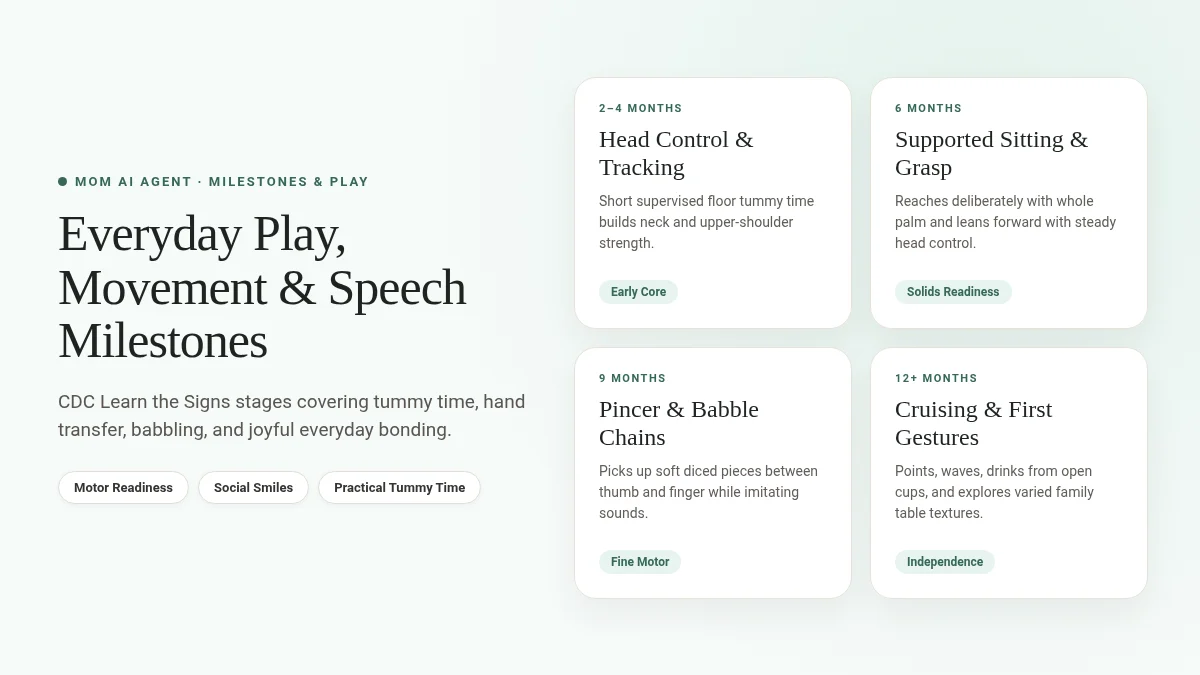
Start short, supervised tummy-time sessions from birth to build head and neck strength—CDC and AAP guidance that MomAI Agent helps parents track as part of daily development routines.
Baby Development Checks: Milestones, Screening, and When to Worry
A global, evidence-backed guide to baby development checks, milestone tracking, language and feeding skills, and when to ask for evaluation.
What is language development
Centers for Disease Control and Prevention guidance supports using age-appropriate, safety-first steps for development decisions.
What to expect from your 6 week old babys development parents
Centers for Disease Control and Prevention guidance supports using age-appropriate, safety-first steps for development decisions.
What to expect in your 5 week old babys development and care parents
Centers for Disease Control and Prevention guidance supports using age-appropriate, safety-first steps for development decisions.
When Should You Talk to a Pediatrician About Missed Milestones?
Talk to a pediatrician whenever your child is missing expected milestones, losing skills, or you feel concerned about development.
When Should Parents Start Tracking Infant Development?
Parents can start tracking infant development from early infancy, using milestones as a guide and contacting a clinician with concerns.
How Can I Help My Baby Learn to Sit Up Safely?
Help your baby learn to sit by giving supervised floor practice, watching readiness cues, and asking your clinician about concerns.
How Can Parents Track Baby Development Beyond Milestone Charts?
Track baby development by combining milestone checks with everyday observations, feeding readiness, routines, questions, and clinician guidance.
What Are the Main Stages of Child Development From Birth to 2?
From birth to age 2, children move through early infancy, later infancy, early toddlerhood, and the second year as skills build across movement, language, social, and feeding domains.
What Is Child Development, and Why Does It Matter Early?
Child development is how babies and toddlers build skills in movement, communication, learning, social connection, and daily life.
How Do Child Development Centers Support Babies and Toddlers?
Child development centers support babies and toddlers by nurturing daily routines, observing milestones, partnering with families, and encouraging safe feeding and play.
When Should Parents Contact Child Development Services?
Contact child development services whenever you are concerned about your child’s development, behavior, feeding skills, or missed milestones.
What Is Child Development Psychology for Toddler Behavior?
Child development psychology helps parents understand toddler behavior by viewing skills, emotions, and actions in the context of age and development.
How Can Parents Support Early Child Development at Home?
Parents support early development by using everyday routines to play, talk, feed safely, track milestones, and act early when concerns arise.
When Should Parents Worry About Baby Milestones?
Parents should worry when a baby is missing expected skills for their age or loses skills, while remembering that some variation is normal.
What Should Parents Ask About 6-Month Developmental Milestones?
At the 6-month checkup, ask how your baby is developing, what to watch next, and when to act early if concerns come up.
What Are Developmental Disabilities, and When to Ask for Help?
Developmental disabilities are concerns about how a child learns, moves, communicates, or relates; ask for help whenever milestones or instincts raise concern.
How Can Early Support Help Babies Thrive From 0-24 Months?
Early support helps babies thrive by tracking milestones, responding to concerns early, and building safe feeding and family routines.
What Should I Expect at My Baby’s 6-Month Check-Up?
At 6 months, expect a visit focused on development, milestone tracking, feeding readiness, solid foods, safety, and your questions.
Why Do Babies Giggle, and What Does It Show Developmentally?
Babies giggle as part of social communication, sensory learning, and play, and it can be one sign to view alongside broader developmental milestones.
Explore Other Care Hubs
View Topics Library →Feeding & Nutrition
Starting solids, first foods, allergens, breastmilk/formula storage, and US vs. Canada feeding guidance organized from official agencies.
Sleep & Routines
Safe sleep checklists, newborn-to-toddler routines, room-sharing rules, and practical nighttime rhythms grounded in official public-health guidance.
Mom Health
Postpartum physical recovery, lactation logistics, emotional check-ins, and urgent warning-sign guidance curated from official health agencies.
Safety
Choking cut sizes, food storage and hygiene, allergen readiness, fever thresholds, and urgent escalation guidelines from official health agencies.
Recipes
Age-adapted family meals, iron-rich first-food combos, allergen-aware prep notes, and quick 10-minute kitchen ideas.
Web-Native Caregiver Tools
Kitchen Reference
Foods Database
Check choking risk badges, 6m/9m/12m+ cut sizes, and allergen notes for 83+ first foods.
Meal Ideas
Stage Recipes
Browse 700+ baby and toddler recipes filtered by age stage, iron focus, and allergens.
Printable Sheets
Caregiver Toolkits
Print US/Canada fridge guides, daycare allergen cards, and bilingual EN/ZH family handoff sheets.